

What Is Longan Tea?
Longan tea is longan fruit, usually dried, steeped or simmered in water. You might find it served on its own or with red dates, goji berries, citrus peel, or flowers. It may have no tea leaves at all. If you are deciding whether to try it, expect a gentle fruit sweetness, not the brisk taste of black tea.
What is longan?
Longan (Dimocarpus longan) is in the same botanical family as lychee. Peel back its thin tan shell and you find translucent, sweet flesh around a dark seed. The fruit is eaten fresh, but dried longan gives hot water a deeper, rounder flavor. Chinese ingredient lists may call the dried fruit gui yuan (桂圆).
"The pulp does not adhere to the seed and is flavorful and sweet with 12-21% soluble solids." - University of Florida IFAS
The soluble-solids figure is for fresh fruit. It does not measure the sugar in your cup.
There is no set formula for longan tea. Fruit and water are enough, though some blends add other dried botanicals. A cup made with plain longan has no tea leaves, while a blend that includes black or green tea also has a source of caffeine. The ingredient list makes the difference clear.
What does longan tea taste like?
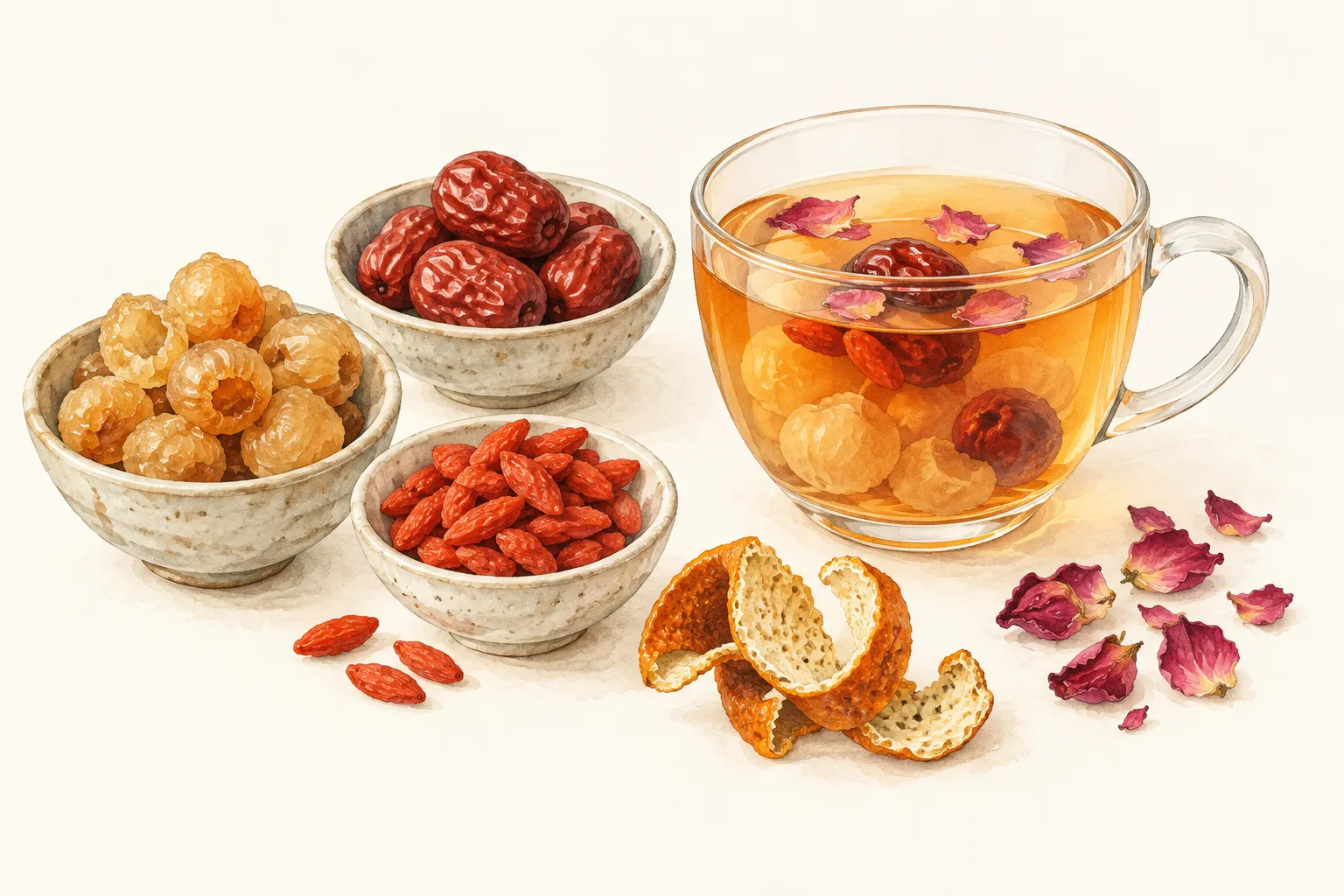
In hot water, dried longan brings a mellow, honey-like fruit note. The sweetness stays subtle after a short steep. Simmering brings out a fuller, darker flavor, though what else goes into the cup matters too.
Ingredient paired with longan |
What it contributes to the cup |
|---|---|
Jujube, also called red date |
A rounder, deeper fruit sweetness |
Goji berry |
A lighter sweet-tart fruit accent |
Tangerine peel |
A bright citrus edge against the mellow fruit |
Rose |
A soft floral aroma alongside the fruit |
For deeper fruit sweetness, look for longan with red dates. Rose and tangerine peel take it in another direction, adding floral aroma and a light citrus edge. Plain longan lets the fruit speak for itself.
How is longan tea made?
At home, you can put dried longan in hot water and steep it for 5 to 10 minutes. For more fruit flavor, simmer it for 10 to 15 minutes instead. Torn dried red dates or goji berries can go in as well. These times are for loose fruit; how much fruit and water you use also affects the strength.
With a packaged botanical blend, follow the maker’s directions. A long simmer can change a sachet meant for a short steep. The label will tell you what else is in it.
Why does it appear in everyday tea rituals?
Longan and red dates turn up in Chinese home drinks and sweet preparations. For an afternoon cup, dried fruit and hot water take little effort. The mellow taste and the act of making it may be reason enough to keep it in your routine.
Longan also appears in conversations about traditional wellness. That is cultural context, not a way to predict the flavor of a particular blend or a reason to treat it as medicine. The ingredients tell you more about your cup: whether it has tea leaves and whether the fruit comes with florals or citrus. For more on the category, read the beginner’s guide to Chinese herbal tea.
A longan blend to explore: Yue Rong
Yue Rong from VERI CHUN combines double-petaled red rose, longan, tangerine peel, jujube (red date), and goji berry. The cup is intended to taste of soft rose, mellow fruit, and light citrus. It suits someone who wants a floral longan blend, though it will not taste like plain longan and water. VERI CHUN describes Yue Rong as naturally caffeine-free and no added sugar; the dried fruit still contains natural sugars. The brand’s ingredient notes explain the other botanicals.
Each sachet is individually wrapped. VERI CHUN instructs you to steep one sachet in 350 ml (about 12 US fl oz) of water at 85°C / 185°F for three minutes. Use the loose-fruit approach above when you brew dried fruit on its own.
If you would rather steep a sachet than prepare loose fruit, explore Yue Rong and its full ingredient list. Its rose and light citrus notes give you another way to get acquainted with longan.


