

What Is Goji Berry Tea?
Goji berry herbal tea is made by steeping goji berries in hot water, either on their own or with other botanicals. The berries give a gentle fruit note. Chrysanthemum can make the cup floral, while rose and longan bring a softer fruit-and-flower flavor. A blend with green or black tea leaves will also contain caffeine.
What is goji berry herbal tea?
Goji berries, also called wolfberries, are small fruits often used dried in Chinese food and botanical infusions. On their own in hot water, they make a lightly fruity drink. Goji leaf tea uses the plant’s leaves, so look for the fruit on the ingredient list if you want the berry flavor. In a blend, expect the other ingredients to influence the taste.
“Lycium barbarum L. … known as ‘goji’ or Chinese wolfberry.” - Comparative Study of the Chemical Constituents and Bioactivities of the Extracts from Fruits, Leaves and Root Barks of Lycium barbarum
People call it tea, though a drink steeped from goji berries and other botanicals without tea leaves is an herbal infusion, or tisane. VERI CHUN’s beginner’s guide to Chinese herbal tea explains the difference. Goji has a place in Chinese drinks and cooking; that traditional use does not establish a health effect from a particular cup.
What does goji berry tea taste like?
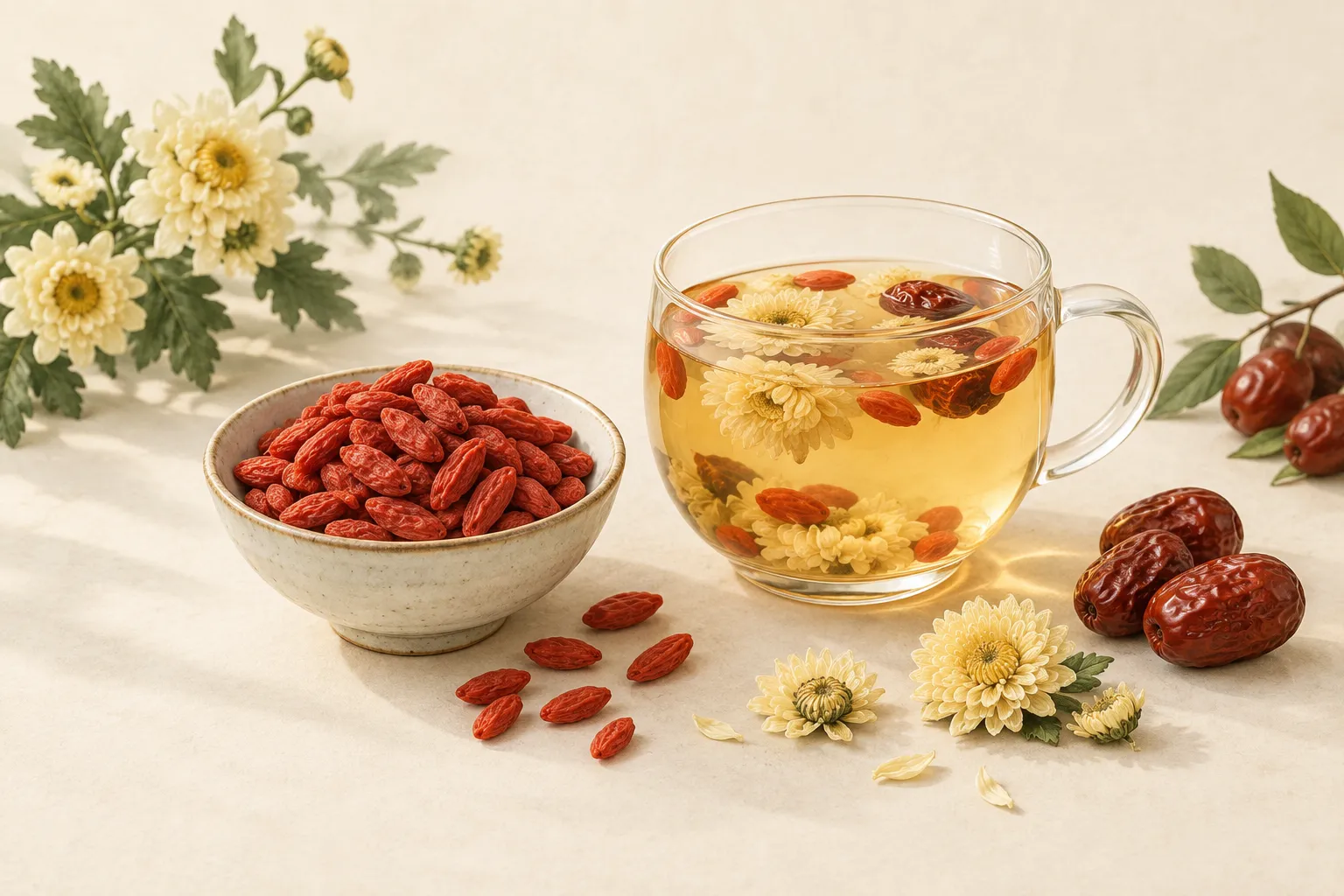
Dried goji berries have mild sweetness and a little tang. Their infusion is delicate rather than juice-like. With chrysanthemum or ginger in the cup, the floral or peppery note may be more noticeable than the berry.
Pairing |
What it adds to the cup |
|---|---|
Jujube (red date) |
Mellow dried-fruit character alongside the goji |
Ginger |
A warming, peppery edge against the soft fruit note |
Chrysanthemum |
A light floral character that keeps the cup airy |
Rose and longan |
Floral aroma and rounded fruit notes |
Ginger takes the cup in a peppery direction; chrysanthemum makes it lighter and more floral. Sweetness in a packaged blend does not tell you whether it has added sugar. The ingredient information does.
Does goji tea contain caffeine?
Goji berries are fruit and do not supply tea-leaf caffeine. A cup of goji with other caffeine-free botanicals is an alternative to green or black tea. Some products labeled “goji berry tea” contain tea leaves, so read the full ingredient list if caffeine matters to you.
VERI CHUN describes its current herbal tea collection as naturally caffeine-free. Its individually wrapped sachets let you make a cup without measuring loose ingredients. That description applies to these blends; other goji drinks may contain tea leaves.
Why choose it, and how should you think about benefits?
Goji tea suits a taste for gentle fruit and offers a change from plain water or tea leaves. Goji berries also have a long history in Chinese food and botanical traditions.
Health claims about goji often refer to its compounds or concentrated extracts. Researchers examine berries, juice and extracts as different preparations. Results from those preparations do not establish the effects of a brewed infusion or a finished herbal blend. Ingredients, flavor and caffeine content are sounder reasons to choose a cup.
Goji berry in VERI CHUN blends
Three of VERI CHUN’s five current tea blends contain goji berry. Each has a different set of companion botanicals, listed on the Our Ingredients page. All five come in individually wrapped sachets, and the store describes them as naturally caffeine-free.
Blend |
Ingredients |
Flavor direction |
|---|---|---|
Qing Ping |
Goji Berry, White Chrysanthemum, Cassia Seed, Lotus Leaf |
Light florals, subtle fruit sweetness, toasted-herbal finish |
Yue Rong |
Double-petaled Red Rose, Longan, Tangerine Peel, Jujube (Red Date), Goji Berry |
Soft rose, mellow fruit, light citrus |
Yi Yuan |
Cultivated Ginseng (5 years or younger), Mulberry Fruit, Polygonatum Rhizome (Huang Jing), Jujube (Red Date), Goji Berry |
Mellow, lightly earthy, gently fruity |
Qing Ping is the floral choice if you do not want rose. Yue Rong brings rose and mellow fruit, while Yi Yuan is earthier. Yi Yuan’s product page states it is not suitable for infants or young children, or for pregnant or breastfeeding women. Refer to that advisory and a qualified professional for suitability questions.
If you are buying for someone who prefers mint or tart fruit, the other two blends may suit them better. Zhi Lü has crisp mint, light florals and a green finish. Fu Feng is tart, dark-fruited and gently smoky. Neither contains goji berry.
How to make a cup
For each of its five blends, VERI CHUN instructs you to steep one sachet in 350 ml (about 12 US fl oz) water at 85°C / 185°F for three minutes. Loose dried goji and other brands’ teas may call for different preparation.
If light florals and a toasted-herbal finish appeal to you, start with Qing Ping. If you prefer rose and fruit, Yue Rong takes goji in that direction instead.


