

What Is Chinese Jujube Tea?
Chinese jujube tea is an infusion of jujube fruit, also called red date. On its own, the fruit makes a mellow drink. In a blend, rose can bring out a floral note; earthy roots take it in another direction.
The video offers preparation ideas. Its references to sleep are not evidence of an effect from jujube tea or any VERI CHUN blend.
What is Chinese jujube tea?
Jujube is a fruit from a different plant than the date palm. In Chinese food and drink, it often goes by “red date.” You can infuse the fruit in water on its own or find it among the ingredients in a botanical blend. Neither requires black or green tea leaves.
"Jujube is the edible fruit of Ziziphus jujuba, a shrub or tree in the Rhamnaceae family." - Royal Botanic Gardens, Kew
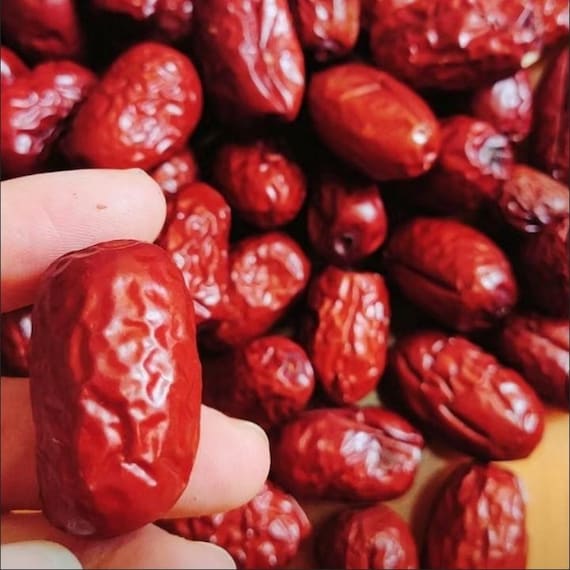
You may also see it called “red date tea.” A blend sold under that name can include flowers, herbs, peel or other fruits, so read the ingredient list if you want to know what else will be in your cup.
What does jujube tea taste like?
Jujube brings mellow fruit sweetness, without the briskness of black tea. The amount of fruit and the preparation affect how strong it tastes. Other botanicals can make that fruit note more subtle.
Pair it with rose, longan and tangerine peel for a floral, fruity cup with a hint of citrus. Ginseng, mulberry fruit and polygonatum rhizome lead to a quieter, earthier profile. The name on the front of the box cannot tell you all of that.
Why is jujube paired with other botanicals?
Jujube supplies a fruit note that works with floral, citrus and earthy ingredients. The complete ingredient list is useful if you already know which of those flavors you enjoy.
VERI CHUN includes jujube in two blends with distinct flavors:
Blend |
Ingredients |
Flavor direction |
|---|---|---|
Yue Rong |
Double-petaled Red Rose, Longan, Tangerine Peel, Jujube (Red Date), Goji Berry |
Soft rose, mellow fruit, light citrus |
Yi Yuan |
Cultivated Ginseng (5 years or younger), Mulberry Fruit, Polygonatum Rhizome (Huang Jing), Jujube (Red Date), Goji Berry |
Mellow, lightly earthy, gently fruity |
Yi Yuan’s product page says it is not suitable for infants or young children, or for pregnant or breastfeeding women. For individual suitability questions, consult a qualified professional.
The other three VERI CHUN teas do not contain jujube. Zhi Lü pairs Mulberry Leaf, Chrysanthemum, Peppermint and Tangerine Peel for crisp mint, light florals and a green finish. Fu Feng combines Cassia Seed, Hawthorn, Tangerine Peel, Dandelion, Dark Plum (Wu Mei) and Licorice Root for a tart, dark-fruited, gently smoky cup. Qing Ping uses Goji Berry, White Chrysanthemum, Cassia Seed and Lotus Leaf for light florals, subtle fruit sweetness and a toasted-herbal finish. For a jujube cup, the choice is Yue Rong or Yi Yuan.
When and how do people drink it?
Have it at breakfast, during an afternoon break or in the evening whenever a warm fruit infusion sounds appealing. There is no prescribed hour. VERI CHUN describes all five of its tea blends as naturally caffeine-free, so you can choose one when you want a drink without caffeine. That says nothing about how it might affect sleep or stress.
Preparation depends on whether you have whole dried fruit or a pre-portioned blend. For its own teas, VERI CHUN publishes this direction: one sachet in 350 ml (about 12 US fl oz) of water at 85°C / 185°F, steeped for 3 minutes. Individually wrapped sachets give you a measured portion for home or work. Use those directions for these blends; loose fruit calls for its own preparation.
What about traditional uses and health claims?
Jujube appears in Chinese food and drink traditions. Traditional uses are part of its cultural context, but they do not establish what drinking a cup will do to your body. A finding about an isolated ingredient or extract cannot be applied to a finished infusion. The beginner’s guide to Chinese herbal tea explains more about infusions and tea leaves.
Choose a cup for its ingredients and flavor, not for a promised medical result. Tea is no substitute for care. If a personal health concern affects what you can consume, ask a qualified professional.
Which jujube blend should you try?
For soft rose and mellow fruit with a light citrus edge, choose Yue Rong. Yi Yuan is the quieter option, lightly earthy and gently fruity. Both contain jujube and goji berry, though their other ingredients change the overall flavor. Yi Yuan’s product page says it is not suitable for infants or young children, or for pregnant or breastfeeding women; consult a qualified professional with individual suitability questions.
If rose and fruit appeal to you, explore Yue Rong for a convenient first jujube blend. The listed rose, longan, tangerine peel, jujube and goji berry make its flavor direction clear before you brew.


