

What to Write in an Herbal Tea Gift Note
Tell the recipient why you picked this herbal tea for them. You could write: “I thought of you when I saw the rose and mellow fruit in this blend. Hope you enjoy a cup when you have a moment to yourself.” Add their name, a shared memory or a specific thank-you before you sign it. Skip promises about how the tea will make them feel.
This video shows herbal tea being prepared. VERI CHUN’s directions for these blends appear below.
A simple formula for a tea gift note
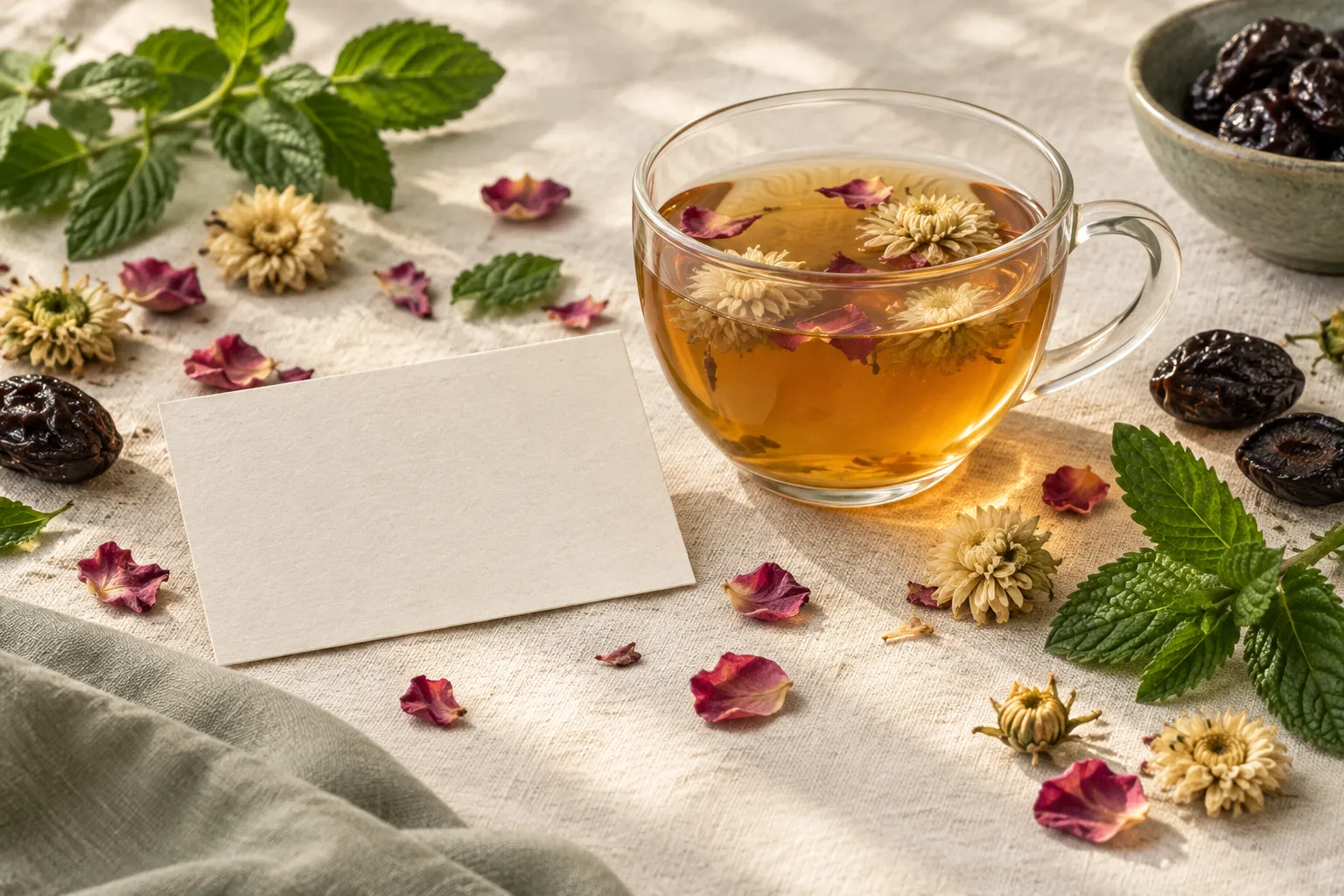
Start with your connection to the recipient, then name a flavor they might like. Leave them with an invitation to enjoy a cup:
“Thank you for [specific thing]. I picked this [floral/minty/fruity/earthy] tea because you enjoy [taste or familiar food]. Hope you enjoy a cup sometime soon.”
Fill in the brackets with details from your own relationship. If you do not know their tea preferences, say what caught your eye: “The rose and citrus sounded like something you might enjoy.” You can still give a thoughtful reason without guessing their favorite flavor.
For a small gift tag, try “For your next tea break, with thanks for Tuesday’s help.” The reference to Tuesday says more than a borrowed quote would.
Short notes for five VERI CHUN blends
VERI CHUN describes all five Chinese botanical infusions as naturally caffeine-free, with individually wrapped sachets. The flavor descriptions below give you something specific to say; use your own closing.
Blend |
Published flavor and ingredients to mention |
Note you can adapt |
|---|---|---|
Yue Rong |
Soft rose, mellow fruit, light citrus; double-petaled red rose, longan, tangerine peel, jujube (red date) and goji berry |
“I remembered how much you like floral flavors, so I chose this rose, longan and citrus blend. Hope you enjoy a cup and tell me what you think.” |
Zhi Lü |
Crisp mint, light florals, green finish; mulberry leaf, chrysanthemum, peppermint and tangerine peel |
“You always pick the fresh, minty option. This one pairs peppermint with chrysanthemum and a green finish. A little something for your next tea break.” |
Fu Feng |
Tart, dark-fruited, gently smoky; cassia seed, hawthorn, tangerine peel, dandelion, dark plum (wu mei) and licorice root |
“For someone who likes tart fruit more than sweet florals: this hawthorn and dark plum blend sounded like your kind of cup.” |
Qing Ping |
Light florals, subtle fruit sweetness, toasted-herbal finish; goji berry, white chrysanthemum, cassia seed and lotus leaf |
“I chose this for its light chrysanthemum florals and toasted-herbal finish. I’d love to hear which note you notice first.” |
Yi Yuan |
Mellow, lightly earthy, gently fruity; cultivated ginseng (5 years or younger), mulberry fruit, polygonatum rhizome (huang jing), jujube (red date) and goji berry |
“You enjoy earthy flavors, so I thought you might like this ginseng and mulberry-fruit blend. Hope it makes a pleasant cup.” Important: The Yi Yuan product page says it is not suitable for infants or young children, pregnant women or breastfeeding women. For questions about suitability, consult a qualified professional. |
You do not need to fit the full ingredient list on a card. “Dark plum and hawthorn” suits someone who loves tart flavors. For a floral tea drinker, “rose and light citrus” or “chrysanthemum with a toasted-herbal finish” is more apt.
Notes for different occasions
For a birthday or a thank-you, name the occasion first and follow it with your reason for choosing the tea. A small tag may need a shorter sign-off.
A thank-you: “Thank you for helping me get through that project. I remembered you like mint, so I picked a crisp peppermint and chrysanthemum tea for you.”
A birthday: “Happy birthday! The soft rose, mellow fruit and light citrus in this blend made me think of your love of floral flavors. Here’s to another year of good conversations.”
A coworker gift: “Thanks for being such a thoughtful teammate. I chose this tart dark-plum and hawthorn blend because you always go for fruit-forward flavors.”
Just thinking of you: “I saw the light chrysanthemum and goji notes and thought you might enjoy them. No occasion needed, just a cup to share across the distance.”
No clue about their tastes? “I picked something new for you to try” leaves that open. An invitation to share a cup also works if you plan to make time for it.
How to mention ingredients and brewing
Pick an ingredient the recipient can picture: rose, mint, dark plum or earthy ginseng. The VERI CHUN ingredients page has the full lists. “I chose this because you like tart fruit” explains the gift without making a health promise.
For a separate brewing tag, use VERI CHUN’s instruction for these five blends: steep one sachet in 350 ml (about 12 US fl oz) of water at 85°C / 185°F for 3 minutes. You could shorten that to “One sachet, 350 ml water, 185°F, three minutes.” Each sachet is individually wrapped, so the recipient can make one cup at a time. Other herbal teas may call for different instructions.
If you also give a botanical scented card, keep it separate from the tea. The card is for fragrance only: it is not edible and must not go into a drink. Buying a card alone does not include tea, and its fragrance name is not a tea ingredient list.
Use your own card or tag; do not promise a gift-wrap or personalized-message service. Your handwriting and one detail about the recipient are enough.
A small note that sounds like you
Before signing, look for a phrase that could go to anyone. Replace “enjoy this lovely tea” with their fondness for mint, the tart fruit they order or a conversation you want to continue over a cup. One personal detail will carry the note.
To find a flavor that matches the person you have in mind, explore VERI CHUN’s Herbal Tea collection and choose the blend whose ingredients you can describe in your own words.


