

What Is Huang Jing? Polygonatum in Yi Yuan
Huang jing is the Chinese name for the rhizome of certain Polygonatum plants. On a polygonatum tea label, “Polygonatum Rhizome (Huang Jing)” names the ingredient. VERI CHUN includes it with cultivated ginseng and fruits in Yi Yuan, a blend described as mellow, lightly earthy, and gently fruity.
What is huang jing?
Polygonatum is a botanical genus. The Chinese Medicine Regulatory Office identifies huang jing as the dried rhizome of certain species in that genus. People often call it a root, though Yi Yuan’s label uses the more precise “rhizome.” Solomon’s seal is another English name you may see for plants in this genus.
"an underground, horizontal stem capable of producing shoots and roots from each node." - NC State Extension
On a tea label, “rhizome” tells you which part of the plant is used.
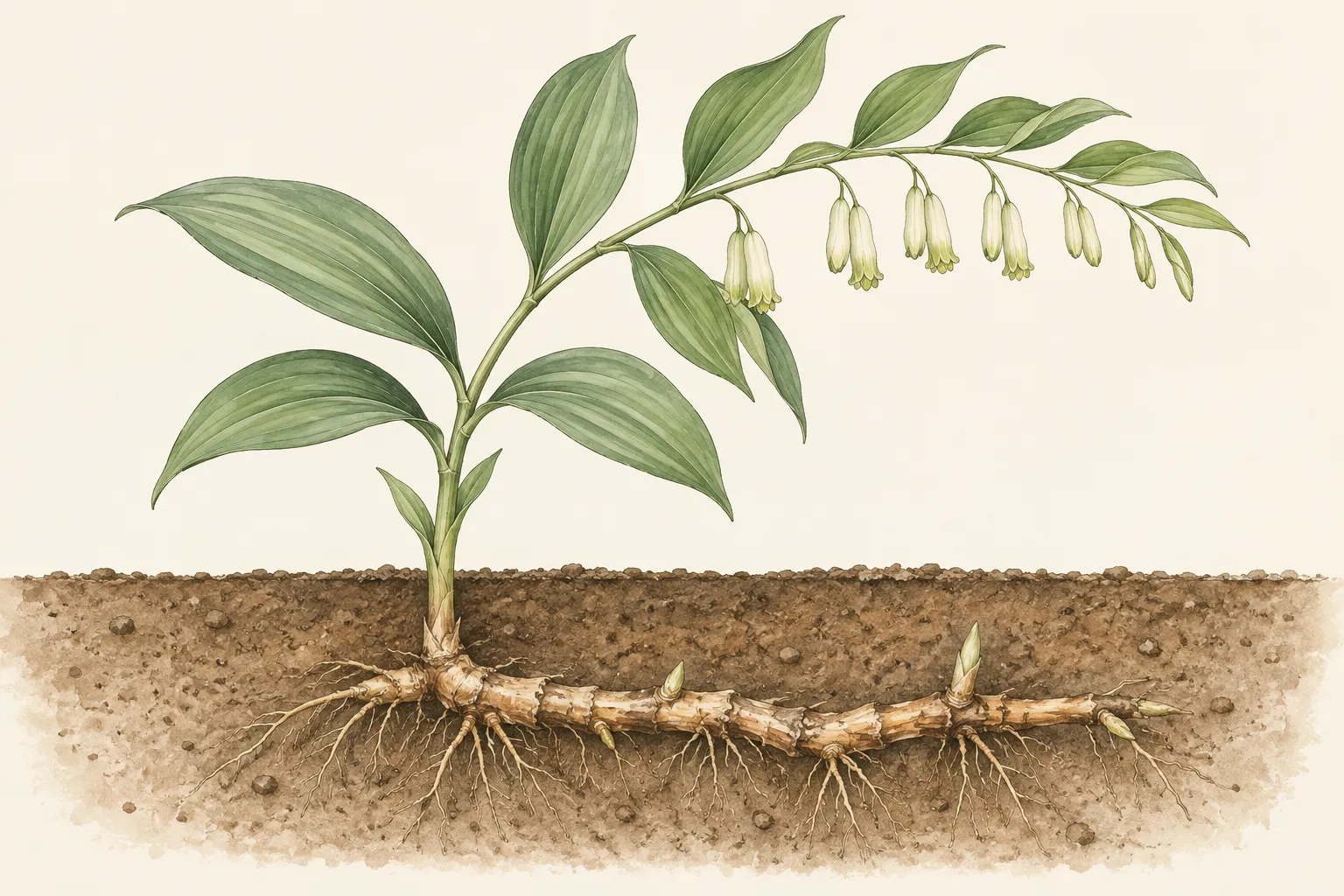
Solomon’s seal covers more than one species. Yi Yuan’s published ingredient list says “Polygonatum Rhizome (Huang Jing)” without naming a species or describing its processing, and a product photo cannot supply those details.
How to recognize polygonatum tea on a label
Start with the plant part: Polygonatum rhizome or huang jing points to the botanical material. “Solomon’s seal” alone leaves the species unclear. A polygonatum tea might contain only that ingredient or include it in a blend, so read the full ingredient list.
Wording you might see |
What it tells you |
|---|---|
Huang jing |
The Chinese ingredient name |
Polygonatum rhizome |
The genus and the plant part |
Solomon’s seal |
A broad English common name, not necessarily an exact species |
Polygonatum Rhizome (Huang Jing) in Yi Yuan |
The wording VERI CHUN uses for one ingredient in a five-botanical blend |
Plants in the Polygonatum genus have other Chinese names too. A bag of dried rhizome sold for brewing differs from Yi Yuan’s individually wrapped blend, even when both mention Polygonatum. Their cups need not taste alike.
Here is a useful way to read a box: first find the complete ingredients, then locate the Polygonatum entry. If that is the only ingredient listed, you are looking at a single-botanical infusion. If the list also includes ginseng, mulberry fruit, jujube, and goji berry, as Yi Yuan’s does, the product is a blend. The word “tea” on the front describes a drink you steep; it does not, by itself, tell you whether the sachet contains tea leaves or which Polygonatum species is inside.
Why is huang jing in Yi Yuan?
Yi Yuan lists Cultivated Ginseng (5 years or younger), Mulberry Fruit, Polygonatum Rhizome (Huang Jing), Jujube (Red Date), and Goji Berry. Its box holds eight individually wrapped 3 g sachets, 24 g total, and VERI CHUN describes the tea as naturally caffeine-free. The brand also lists the botanicals in its other blends on its ingredient page.
The published Yi Yuan profile is mellow, lightly earthy, and gently fruity. It describes the finished blend, without singling out polygonatum as the source of a particular flavor. The ingredient list does not state quantities either, so use the whole profile when comparing Yi Yuan with a single-ingredient infusion.
For shoppers who like to know what is in their cup, the parenthetical “Huang Jing” is a helpful bridge between a Chinese ingredient name and the botanical wording on the package. It makes the ingredient recognizable without asking you to guess a recipe from the name of the blend. The other four botanicals are listed plainly too.
If you are choosing by flavor, Yue Rong offers soft rose, mellow fruit, and light citrus. Zhi Lü has crisp mint, light florals, and a green finish. Yi Yuan’s mellow, lightly earthy, gently fruity profile is the alternative to those floral and minty cups; none of these profiles says anything about a health concern.
How to prepare a cup of Yi Yuan
VERI CHUN gives these brewing instructions for Yi Yuan:
Put one sachet in a cup or teapot.
Add 350 ml (about 12 US fl oz) of water at 85°C / 185°F.
Steep for 3 minutes, then remove the sachet.
Use these directions for Yi Yuan rather than for every dried Polygonatum product. Yi Yuan’s product page says the tea is not suitable for infants or young children, or for pregnant or breastfeeding women. For individual suitability questions, consult a qualified professional and refer to the product advisory.
Because Yi Yuan comes in portioned sachets, you can follow the published water amount and steeping time without measuring loose rhizome. That convenience belongs to this packaged blend; it does not establish brewing directions for a different polygonatum tea.
The takeaway
Huang jing on Yi Yuan’s label means Polygonatum rhizome, one of five botanicals in the sachet. If its mellow, lightly earthy, gently fruity caffeine-free profile appeals to you, explore Yi Yuan and its complete ingredient list.


