

Tangerine Peel in Herbal Tea: A Bright Finish
In herbal tea, dried tangerine peel adds a citrus note that often shows up in the finish. Alongside mellow fruit, flowers, or mint, it changes the way those flavors end on your tongue. For a cup that tastes chiefly of peel, brew the peel alone.
The video shows dried tangerine peel paired with licorice root; use the directions below for VERI CHUN's sachet blends.
What dried tangerine peel brings to the cup
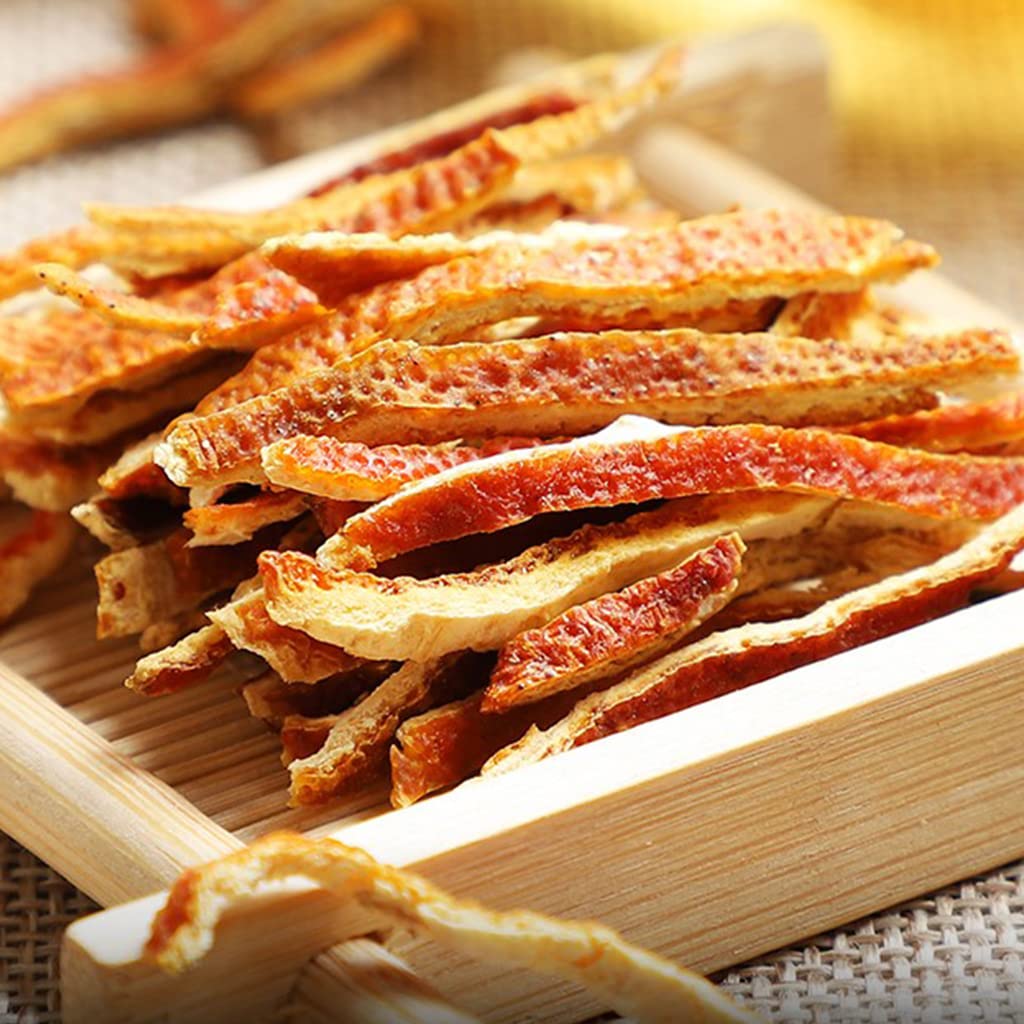
Fresh tangerine zest smells bright and sweet. Dried peel in hot water is less juicy: you get citrus in the aroma, a hint of pith, and a dry finish. The result changes with the amount of peel and the other botanicals in the cup.
Peel works much like a seasoning. It keeps fruit from tasting too heavy and gives rose or chrysanthemum a crisper edge. With peppermint, you may catch the citrus only after the mint. Water and steep time change which note you notice first.
Researchers studied the aroma water collected from heated, distilled dried mandarin peel. Their finding concerns that preparation, not a cup steeped at home:
"Researchers identified 24 major aroma-active compounds in aroma water made from heated, distilled dried mandarin peel, including linalool and d-limonene." - Yang et al., Beverage Plant Research
Peel-only tea versus a botanical blend
If you brew... |
What leads |
What to expect from the peel |
|---|---|---|
Dried tangerine peel on its own |
Citrus peel |
Its aroma, pithy edge, and dry finish are the point of the cup. |
A floral or fruit-forward blend with peel |
Flowers and fruit |
Citrus appears as an accent to the softer notes. |
A mint or tart-fruit blend with peel |
Mint or darker fruit |
Peel can sharpen the finish without becoming the main flavor. |
Brew peel alone if its aroma and dry edge are what interest you. A blend gives you more to taste alongside it. Either way, “citrus” here means peel, not fruit-juice sweetness.
Where the citrus sits in VERI CHUN blends
Three VERI CHUN blends list tangerine peel. The rest of each formula tells you what kind of cup to expect:
Blend |
Listed ingredients |
Flavor direction and peel's place |
|---|---|---|
Yue Rong |
Double-petaled Red Rose, Longan, Tangerine Peel, Jujube (Red Date), Goji Berry |
Soft rose and mellow fruit with light citrus. Choose it if you want the peel as a gentle lift behind floral and fruit notes. |
Zhi Lü |
Mulberry Leaf, Chrysanthemum, Peppermint, Tangerine Peel |
Crisp mint, light florals, and a green finish. The peel adds a light citrus edge under the mint. |
Fu Feng |
Cassia Seed, Hawthorn, Tangerine Peel, Dandelion, Dark Plum (Wu Mei), Licorice Root |
Tart, dark-fruited, gently smoky. Choose this direction if you want citrus alongside a more assertive tart-fruit profile. |
Rose tea drinkers may find Yue Rong the easiest place to start. Zhi Lü is mint-led with a green finish; Fu Feng has the most tart-fruit character and a gently smoky note. In each, the peel has other flavors to work with.
An ingredient list confirms the peel is there, but it gives no quantity per sachet or guarantee of citrus intensity. Choose by the other listed botanicals rather than trying to read strength from their order. VERI CHUN's Our Ingredients page has more on them.
Brew for the finish
VERI CHUN gives these brewing directions for its herbal teas:
Place one sachet in a cup or pot.
Add 350 ml (about 12 US fl oz) water at 85°C / 185°F.
Steep for 3 minutes, then remove the sachet and taste.
Use those directions for VERI CHUN's blends; peel brewed on its own may call for a different approach. The store describes its teas as naturally caffeine-free, with each blend packed in individually wrapped sachets. Smell the cup before your first sip. In Yue Rong, citrus follows rose and mellow fruit. In Zhi Lü, you may find it beneath the mint, especially in the dry, bright finish.
Try the sachet as it comes before adding more peel. You'll have a better sense of the citrus already in the blend.
A small ingredient distinction
VERI CHUN's botanical scented cards have fragrance names, not tea ingredient lists. They are for fragrance only, never for eating or brewing. Look at the tea's ingredients when you want tangerine peel in a drink.
Find your citrus note
If you like rose and mellow fruit, pick Yue Rong for a light citrus accent. Zhi Lü suits a mint preference; Fu Feng has a tart, dark-fruit character. For citrus as the main event, brew peel alone. VERI CHUN lists each formula in full and publishes simple sachet-brewing directions. Explore the Herbal Tea collection to find the blend that sounds good to you.


