

Kinds of Herbal Teas: Choose by Flavor and Ritual
For a sweet herbal tea, begin with jujube, longan or rose. If that sounds too soft, mint gives you a brisker cup and tart fruit a sharper finish. Read the ingredient list before deciding between loose botanicals and a sachet.
Herbal infusions can contain flowers, leaves, fruit, seeds, peels and roots. Tea made from the tea plant is a separate category; Herbal Tea vs Tea: What's the Difference? explains why. A floral smell or fruit on the label won't tell you how sweet the cup will taste.
"Herbal teas are made from plants other than Camellia sinensis." - NIH National Center for Complementary and Integrative Health
Choose sweet herbal, minty or tart flavors
Picture the flavors you already know. Rosewater might appeal to you more than fresh mint; citrus peel is quite different from stewed fruit. Let that preference steer you past vague promises about an herb.
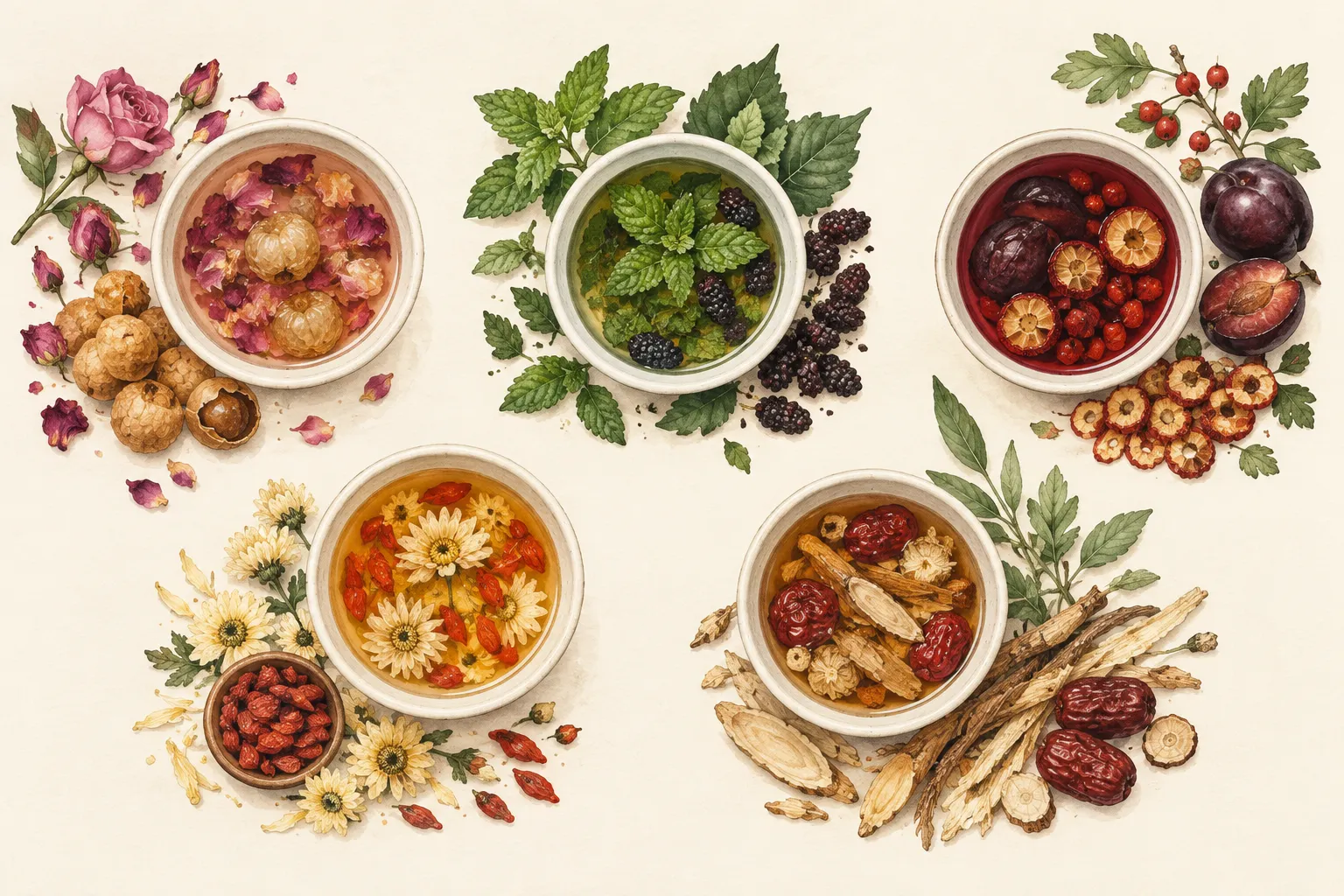
Style |
Common botanical cues |
What to expect |
A good moment to try it |
|---|---|---|---|
Floral |
Rose, chrysanthemum or chamomile flowers |
A light aroma that may taste delicate rather than sweet |
A quiet cup when you want a softer flavor |
Minty and green |
Peppermint or other aromatic leaves |
A crisp, cooling impression with a fresh finish |
A pause at your desk when you want something bright |
Spicy and warming in flavor |
Ginger or cinnamon |
A bolder, aromatic cup that reads spicy rather than fruity |
A long, unhurried mug |
Fruit-forward |
Jujube, longan, hawthorn or dark plum |
A range from mellow sweetness to pronounced tartness |
A cup alongside a snack, or after a meal for the flavor alone |
Earthy and toasted |
Roots, seeds and leafy botanicals |
Mellow depth or a gently roasted impression |
A cup when floral blends feel too light |
Longan and jujube bring mellow fruit notes, while hawthorn points toward tartness. Licorice root can leave a sweet impression even alongside tart ingredients. If you have a sweet tooth but dislike candy-like flavors, a gentle fruit or floral profile without a prominent licorice note may suit you better.
Read the plant parts on the label
“Clean” and “premium” give you little to go on. Look for flowers if you want fragrance, leaves for minty or green notes, and fruit or peel if you care about the finish.
Flowers often lead with fragrance. Rose gives a different impression from chrysanthemum, which can sit alongside green or toasted notes.
Leaves can taste crisp, as with peppermint, or leafy and mild, as with mulberry leaf. Fresh leaves and dried leaves may need different brewing directions.
Fruit and peel span mellow and tart. Longan and jujube suggest rounder fruit notes; tangerine peel adds citrus lift; hawthorn and dark plum point toward tang.
Seeds and roots can bring deeper flavors. Cassia seed can sit in a toasted-herbal profile, while polygonatum rhizome appears in a mellow, earthy blend. A rhizome is a plant's underground stem.
The ingredient list gives you a starting point. The blend's flavor description helps you see how those parts come together.
Match a VERI CHUN blend to your moment
VERI CHUN's five Chinese botanical infusions range from rose and mellow fruit to crisp mint, tart plum and earthy flavors. Ingredients come from suppliers in various regions of China and the Chengdu herbal ingredient market. Botanical traditions inform the blends, but flavor is the reason to pick one for your cup; they aren't presented as treatments.
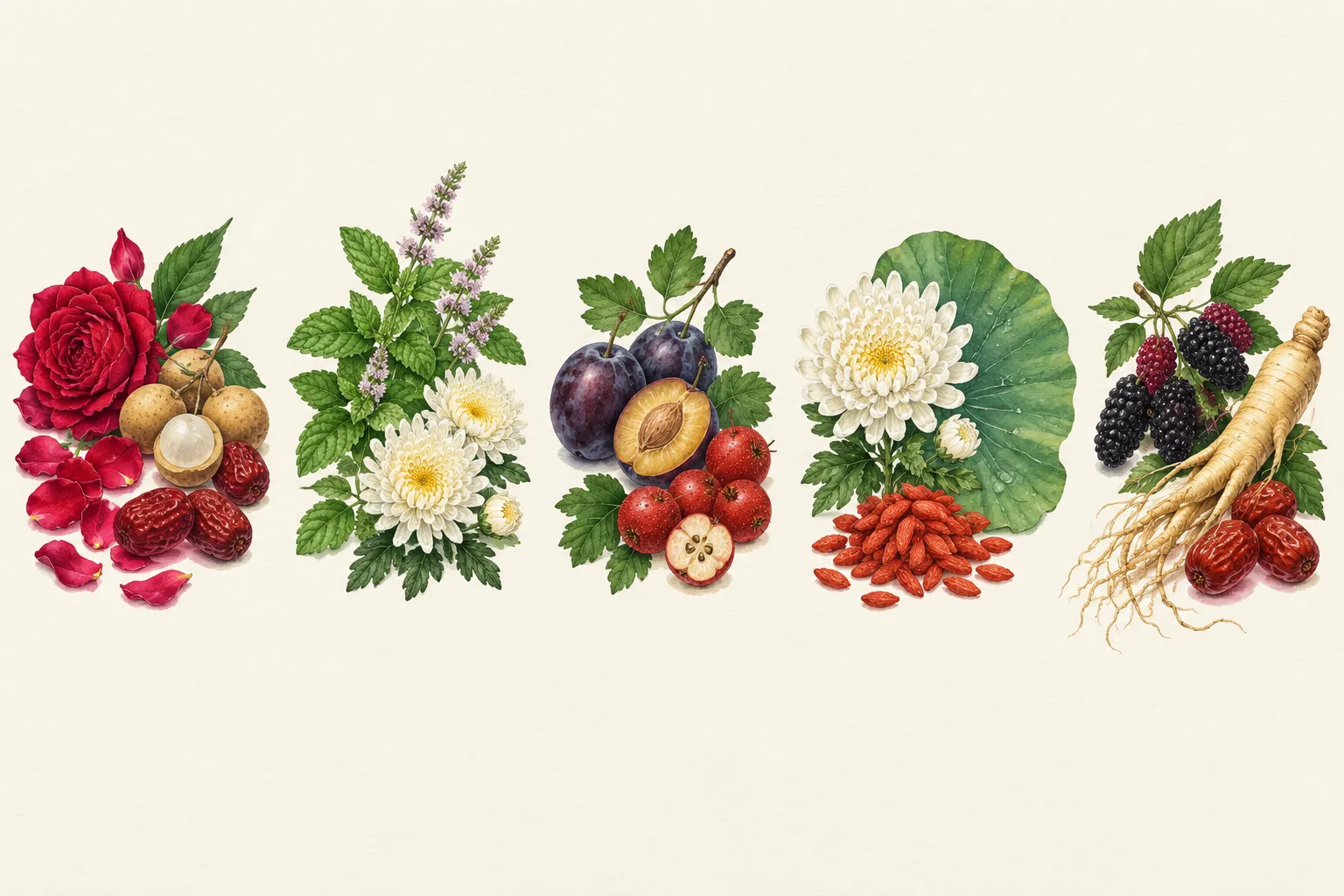
Blend |
Complete ingredient list |
Flavor direction |
If you usually like… |
|---|---|---|---|
Yue Rong |
Double-petaled Red Rose, Longan, Tangerine Peel, Jujube (Red Date), Goji Berry |
Soft rose, mellow fruit, light citrus |
Fragrant fruit with gentle sweetness |
Zhi Lü |
Mulberry Leaf, Chrysanthemum, Peppermint, Tangerine Peel |
Crisp mint, light florals, green finish |
A fresh, leafy cup |
Fu Feng |
Cassia Seed, Hawthorn, Tangerine Peel, Dandelion, Dark Plum (Wu Mei), Licorice Root |
Tart, dark-fruited, gently smoky |
A punchier fruit profile rather than mellow sweetness |
Qing Ping |
Goji Berry, White Chrysanthemum, Cassia Seed, Lotus Leaf |
Light florals, subtle fruit sweetness, toasted-herbal finish |
A delicate cup with a toasted edge |
Cultivated Ginseng (5 years or younger), Mulberry Fruit, Polygonatum Rhizome (Huang Jing), Jujube (Red Date), Goji Berry |
Mellow, lightly earthy, gently fruity |
Fruit notes with earthy depth. Product-page advisory: not suitable for infants or young children, pregnant or breastfeeding women. |
Sweet herbal tea or tart fruit?
If rose and mellow fruit sound good, Yue Rong is a place to start. It is the blend VERI CHUN describes as having no added sugar. Qing Ping has subtler fruit sweetness and a toasted-herbal finish. For a tart cup, Fu Feng pairs dark plum and hawthorn with licorice root.
Zhi Lü is the minty option. Yi Yuan tastes mellow and lightly earthy; its product-page advisory says it is not suitable for infants or young children, pregnant or breastfeeding women. If it's a gift, choose a flavor the recipient likes instead of guessing which botanical they need.
Brew a cup you will enjoy
VERI CHUN describes all five blends as naturally caffeine-free. The sachets come individually wrapped, and the store gives the same brewing instructions for each blend:
Put one sachet in a cup or pot.
Add 350 ml (about 12 US fl oz) of water at 85°C / 185°F. If you start with boiled water, let it cool to that temperature.
Steep for 3 minutes, then take a sip before changing anything.
On the first sip, pay attention to the finish. You might notice crisp mint or a lingering toasted note. Loose botanicals and instant herbal tea can have different preparation directions from these sachets.
Shop with ingredient clarity
Fruit and licorice can make a cup taste sweet. Taste alone can't tell you whether a blend has added sugar. VERI CHUN describes Yue Rong, specifically, as having no added sugar.
The word “herbal” doesn't guarantee a caffeine-free drink; some products include caffeinated ingredients. Nor can you judge suitability for a medical condition by flavor. Read the product-page advisory and ask a qualified professional about suitability.
If you buy bulk herbal tea, use its own brewing directions instead of sachet instructions. VERI CHUN's botanical scented cards are for fragrance only. Never eat or brew them; a card purchased on its own does not include tea.
For your first cup, decide whether you'd enjoy soft rose and fruit, fresh mint, or tart dark plum and hawthorn. The VERI CHUN Herbal Tea collection lists the ingredients for each blend, so you can choose by what you'd like to drink.


