

Herbal Tea Blends vs. Single-Ingredient Infusions
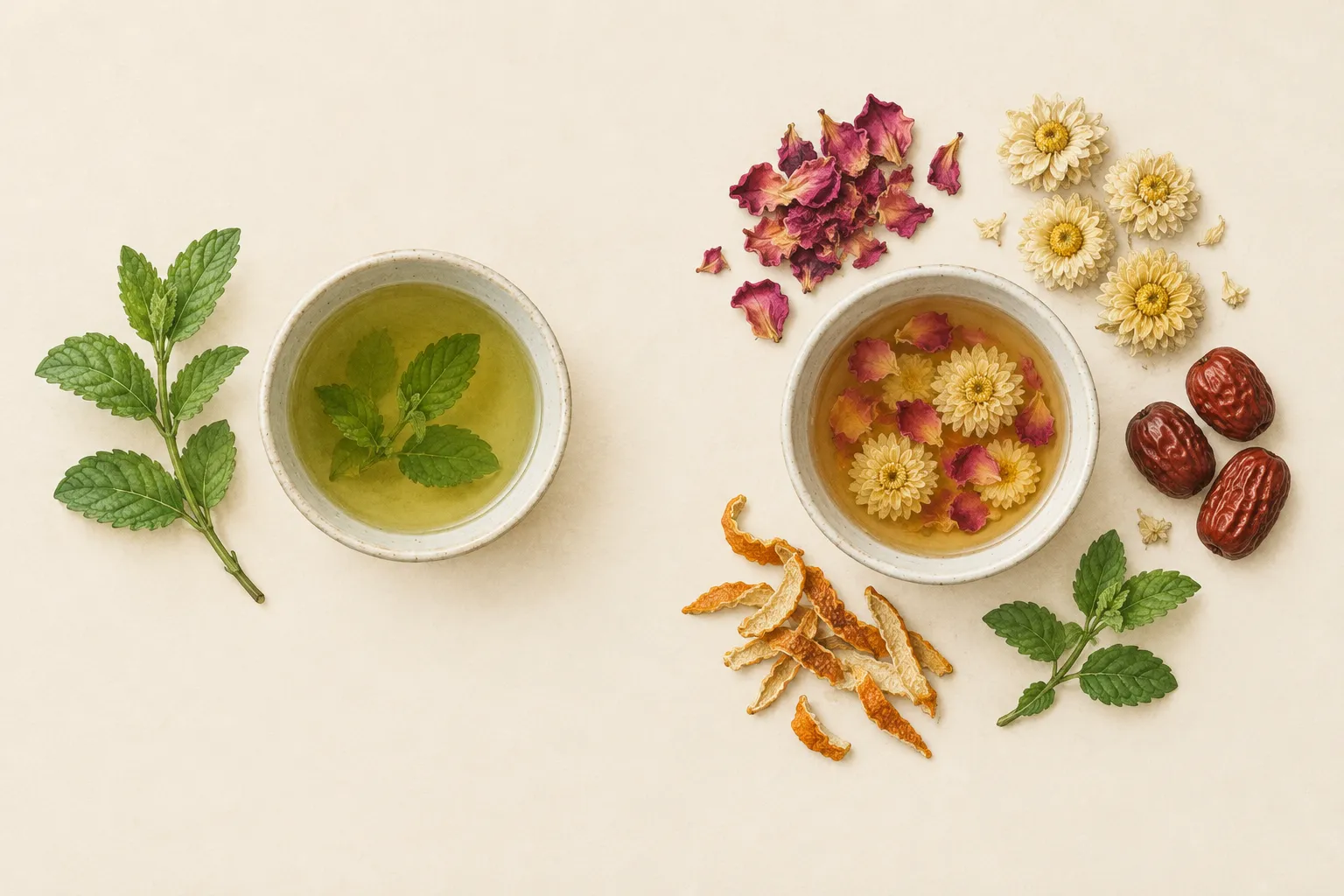
Choose a single-ingredient infusion to get to know one botanical's flavor. Choose a ready-made herbal blend when you want several notes in one cup without mixing the ingredients yourself. The decision comes down to whether you prefer that clear reference point or a layered flavor you can make again with little preparation.
“Herbal tea” can mean botanicals steeped in water without leaves from the tea plant. A single-ingredient infusion uses one botanical, while a blend combines two or more. Either can be easy to brew. To know what's in the cup, read the ingredient list alongside the flavor description.
“Camellia sinensis and its cultivars are the sole source of true tea.” - Missouri Botanical Garden
Herbal tea blends vs. single-ingredient infusions at a glance
What matters |
Single-ingredient infusion |
Ready-made herbal blend |
|---|---|---|
Flavor |
One botanical's character is easier to identify |
Several notes can appear together or in sequence |
Ingredient clarity |
A short list makes it easy to see what's in the cup |
A complete list lets you assess every botanical, even if the flavors overlap |
Choice |
Good for learning whether you enjoy a specific plant's taste |
Good for choosing an overall profile, such as rose and fruit or mint and florals |
Preparation |
Depends on the botanical and the seller's directions |
Depends on the product; preportioned sachets can remove measuring |
A peppermint-only infusion keeps the focus on mint. Add flowers and citrus peel to a blend, and the mint might stand out at first before the other notes come through. Flavor is the point of this comparison; it says nothing about potency or health effects.
What to read on the ingredient label
Read the ingredients before you decide based on the flavor name. “Rose” might be one note among several. VERI CHUN's botanical scented cards are for fragrance only: they are not edible and should never be brewed. Its Our Ingredients reference is about the botanicals in its drinks. On a tea box, look for:
Count the botanicals. One named plant gives you a single-ingredient infusion; several give you a blend. Pay attention to the part named, too. Mulberry fruit and mulberry leaf are different ingredients.
Look for tea leaves and additions. The word “herbal” alone won't tell you whether a drink contains caffeine or added sweeteners. The ingredients and product description give you a clearer answer.
Compare the list with the flavor description. Rose, mint, citrus peel, dark plum and ginseng point toward different cups. The profile describes the finished flavor, while the list tells you what's in it.
Read the brewing and package details. Preportioned sachets save you from measuring loose botanicals. Follow the water temperature and steep time for the product you chose. VERI CHUN packs eight 3 g sachets in Yi Yuan and eight 8 g sachets in each of its other four blends; weight alone cannot tell you which will taste stronger. Choose by profile and ingredients instead.
For a gift, don't let a fruit note sway you toward a rose-led blend if the recipient dislikes rose. Start with flavors they already enjoy, then read the ingredient list to narrow the choice.
Pick a blend by the flavor you want
VERI CHUN makes five Chinese botanical blends, each with a full ingredient list. The store describes all five as naturally caffeine-free, and each comes in individually wrapped sachets. It does not sell these as single-ingredient infusions.
Blend |
Published flavor profile |
Full botanical ingredient list |
|---|---|---|
Yue Rong |
Soft rose, mellow fruit, light citrus |
Double-petaled Red Rose; Longan; Tangerine Peel; Jujube (Red Date); Goji Berry |
Qing Ping |
Light florals, subtle fruit sweetness, toasted-herbal finish |
Goji Berry; White Chrysanthemum; Cassia Seed; Lotus Leaf |
Zhi Lü |
Crisp mint, light florals, green finish |
Mulberry Leaf; Chrysanthemum; Peppermint; Tangerine Peel |
Fu Feng |
Tart, dark-fruited, gently smoky |
Cassia Seed; Hawthorn; Tangerine Peel; Dandelion; Dark Plum (Wu Mei); Licorice Root |
Yi Yuan |
Mellow, lightly earthy, gently fruity |
Cultivated Ginseng (5 years or younger); Mulberry Fruit; Polygonatum Rhizome (Huang Jing); Jujube (Red Date); Goji Berry |
For a floral gift, Yue Rong puts rose up front. Qing Ping has lighter florals and a toasted-herbal finish. Zhi Lü brings crisp peppermint alongside chrysanthemum and mulberry leaf. Fu Feng is for someone who likes tart fruit with a smoky note; Yi Yuan is mellow, with light earthiness and fruit.
Jujube and goji berry appear in both Yue Rong and Yi Yuan. Yue Rong's profile is soft rose, while Yi Yuan's is mellow and lightly earthy. Qing Ping and Zhi Lü also share an ingredient, chrysanthemum, but Zhi Lü's profile is mintier. Read the rest of each list to see what surrounds a familiar botanical.
Yi Yuan advisory: The Yi Yuan product page states that it is not suitable for infants or young children, or for pregnant or breastfeeding women. For individual suitability questions, consult a qualified professional and the product page advisory.
Brew the cup you chose
VERI CHUN's published method for all five blends is one sachet in 350 ml (about 12 US fl oz) of water at 85°C / 185°F for 3 minutes. Other blends and single-ingredient infusions may call for different brewing. With these sachets, you can repeat the brand's method without measuring loose botanicals.
Make your first cup as directed before adjusting the water or steep time. Notice the aroma, then the finish: floral, green, fruity, tart or earthy. That small pause can help you work out which flavor descriptions suit you, without asking the cup to tell you what your body “needs.”
Which should you buy?
Choose a single-ingredient infusion when you want to taste one botanical on its own, perhaps before trying it in a mixture. Choose a blend for several notes in one prepared cup. If it's a gift, the recipient's taste preferences are a better starting point than a broad promise of “wellness.”
VERI CHUN's five blends give you a choice of soft rose, light florals, crisp mint, tart dark fruit or a mellow earthy cup. They are not single-ingredient teas. The full ingredient lists help you choose, and the individually wrapped sachets share one brewing method. Find the profile that appeals to you in the Herbal Tea collection.


