

Chinese Tea Rituals for Modern Daily Life
Chinese tea rituals can fit into an ordinary day: brew a cup, notice its aroma, and take the first sip before going back to your screen. Your own routine can be simple, as long as you understand the difference between a personal pause and a traditional tea practice.
On a busy afternoon, try a botanical infusion in your usual mug. When someone visits, set out two cups and let them choose a flavor. A little attention to the drink and the person sharing it goes a long way.
What makes a tea ritual Chinese?
In Chinese life, tea is an everyday drink as well as a way to welcome guests. It also has a place at formal occasions. Tea served around the family table, leaf tea prepared in small vessels, and tea offered to elders at a wedding belong to different settings.
"By the Tang dynasty, drinking tea had become embedded in the daily lives of all levels of the social strata." - Smithsonian National Museum of Asian Art
If a guest joins you, set out a cup for them. If you drink alone, pause to smell the tea before sipping. Both are ways to pay attention to the occasion at hand, with no need to rehearse a set of gestures.
Ritual, ceremony and gongfu cha are not the same thing
A daily ritual can be as informal as using a familiar mug and turning away from your screen while the drink steeps. If someone is with you, pour their cup first.
A ceremony carries meaning within its social setting. At a wedding tea ceremony, serving tea is part of a family exchange. It has a purpose beyond brewing a drink.
Gongfu cha, roughly “making tea with skill,” uses tea leaves, often in small vessels with short infusions. The host pays close attention to the leaves, water and pour. That is a specific brewing method, different from steeping a sachet in a mug.
Traditional leaf tea comes from the tea plant; a rose, fruit or mint infusion uses other botanicals. VERI CHUN makes Chinese botanical herbal infusions inspired by Chinese food and botanical traditions. You can enjoy one as a daily cup and learn gongfu cha separately, using tea leaves.
A daily tea ritual that fits your schedule
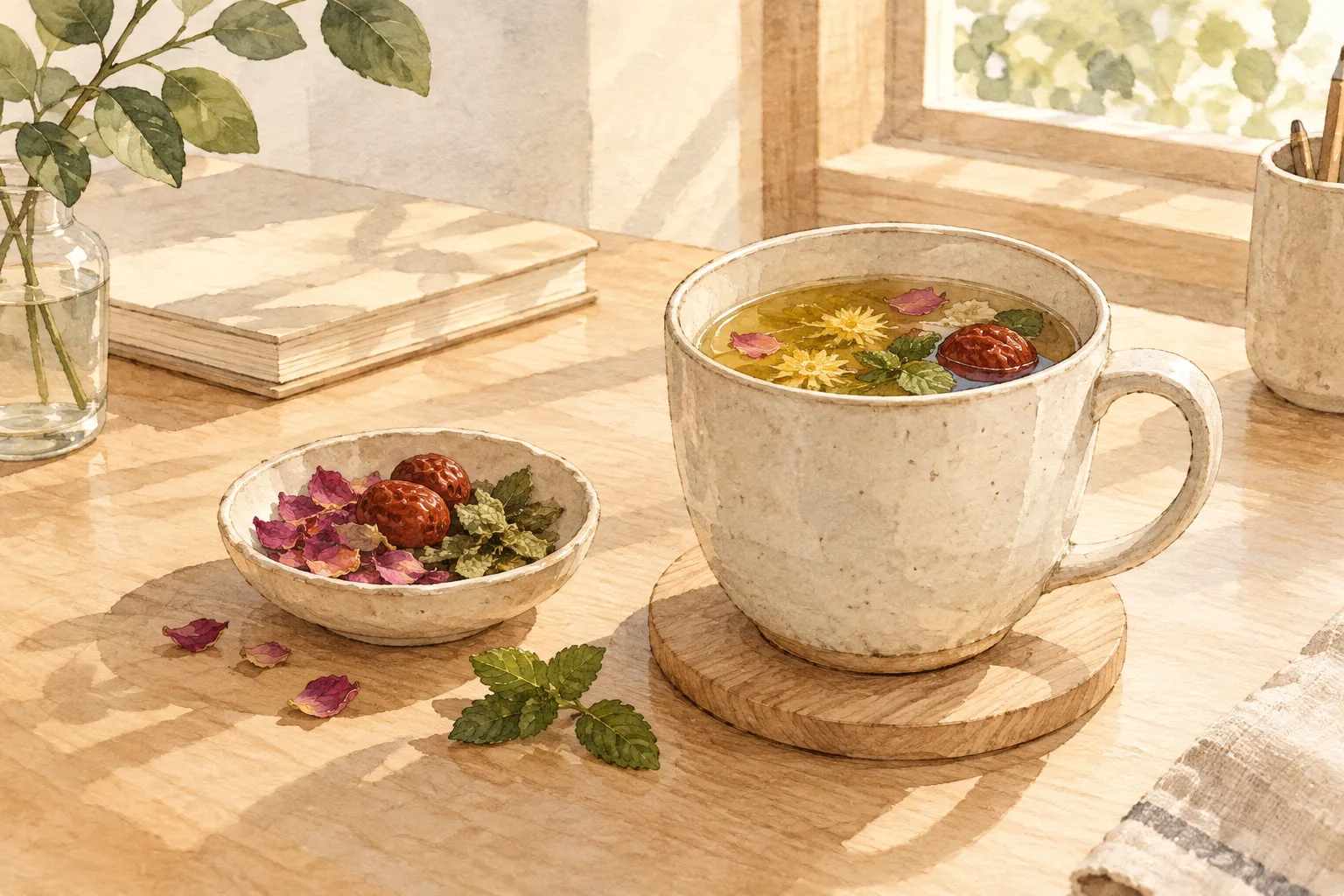
Choose a moment you can repeat, perhaps after shutting your laptop or before opening a book. A clean cup, hot water and a place to set the drink are enough.
VERI CHUN’s published brewing instruction for all five blends is one sachet in 350 ml (about 12 US fl oz) of water at 85°C / 185°F for three minutes. The sachets are individually wrapped, so you can keep one handy at work. These directions apply to the brand’s infusions, not to every Chinese tea.
Give the cup a place in your day that suits you:
At your desk, put the phone aside while the sachet steeps. Smell the drink before your first sip, then keep the cup nearby as you work.
Between tasks, let the three-minute steep mark a pause. Take the first sip without rushing, even if you drink the rest while doing something else.
With another person, offer a choice of two flavors and sit together for the first few sips. Mismatched cups are fine.
Ask a guest whether they prefer a floral or tart drink, and set out water alongside it. If they ask about the ingredients, the list gives you an easy answer. There is no role for them to learn before they can enjoy the cup.
If you want to learn gongfu cha, begin with tea leaves and study the brewing method in its own right. You can still keep a sachet routine for days when you want a straightforward cup.
Choose a cup by flavor, not a promised effect
Begin with a flavor you already like, then read the ingredient list to see what accompanies it. Rose sits alongside fruit and citrus in one blend; peppermint meets florals in another. VERI CHUN provides ingredient descriptions for botanicals you may not recognize. The store describes all five blends as naturally caffeine-free.
Blend |
Listed ingredients |
Flavor direction |
|---|---|---|
Yi Yuan |
Cultivated Ginseng (5 years or younger), Mulberry Fruit, Polygonatum Rhizome (Huang Jing), Jujube (Red Date), Goji Berry |
Mellow, lightly earthy, gently fruity. Its product page advisory says it is not suitable for infants or young children, pregnant women, or breastfeeding women. |
Yue Rong |
Double-petaled Red Rose, Longan, Tangerine Peel, Jujube (Red Date), Goji Berry |
Soft rose, mellow fruit, light citrus; the store describes this blend as having no added sugar. |
Zhi Lü |
Mulberry Leaf, Chrysanthemum, Peppermint, Tangerine Peel |
Crisp mint, light florals, green finish. |
Fu Feng |
Cassia Seed, Hawthorn, Tangerine Peel, Dandelion, Dark Plum (Wu Mei), Licorice Root |
Tart, dark-fruited, gently smoky. |
Qing Ping |
Goji Berry, White Chrysanthemum, Cassia Seed, Lotus Leaf |
Light florals, subtle fruit sweetness, toasted-herbal finish. |
For a gift, ask what the recipient likes to drink. Rose or chrysanthemum may suit a taste for florals; hawthorn and dark plum make for a tarter cup. The ingredient lists help you account for preferences beyond flavor. For questions about an ingredient’s suitability for you, see the product page advisory and speak with a qualified professional.
Keep the meaning, skip the performance
An everyday cup needs no elaborate setup. Choose a drink you like and take care in preparing it; offer a cup when you have company. Ceremonial gestures belong to their own occasions. If gongfu cha interests you, learn its vessels and leaf-tea method as a distinct practice.
Browse the VERI CHUN Herbal Tea collection by flavor, choose a blend you would enjoy drinking, and give it a regular place in your day. The individually wrapped sachets make that small routine easy to keep.


