

Herbal Tea and "Immune Support": How to Choose Without the Hype
The best herbal tea for immune support is one you enjoy drinking, with ingredients you can identify and no promise of cold prevention. If you want a caffeine-free cup for your routine, start with the ingredient list and choose a flavor that appeals to you. No cup can strengthen immunity on demand.
What “immune support” means on a tea label
“Immune support” is a broad wellness phrase. Plants used in food or traditional preparations may be familiar, but that history cannot establish that a particular tea prevents illness or treats symptoms. Findings about an isolated botanical or extract do not tell you what happens when you steep a sachet.
Echinacea appears in many wellness teas. The National Center for Complementary and Integrative Health makes an important distinction between preparations:
“Research findings on one echinacea product may not apply to other products.” - NCCIH
Drink it for the warmth and flavor. Keep food, sleep and medical care in their own place; if you have a health concern, speak with a qualified professional.
Botanicals you may see in herbal tea
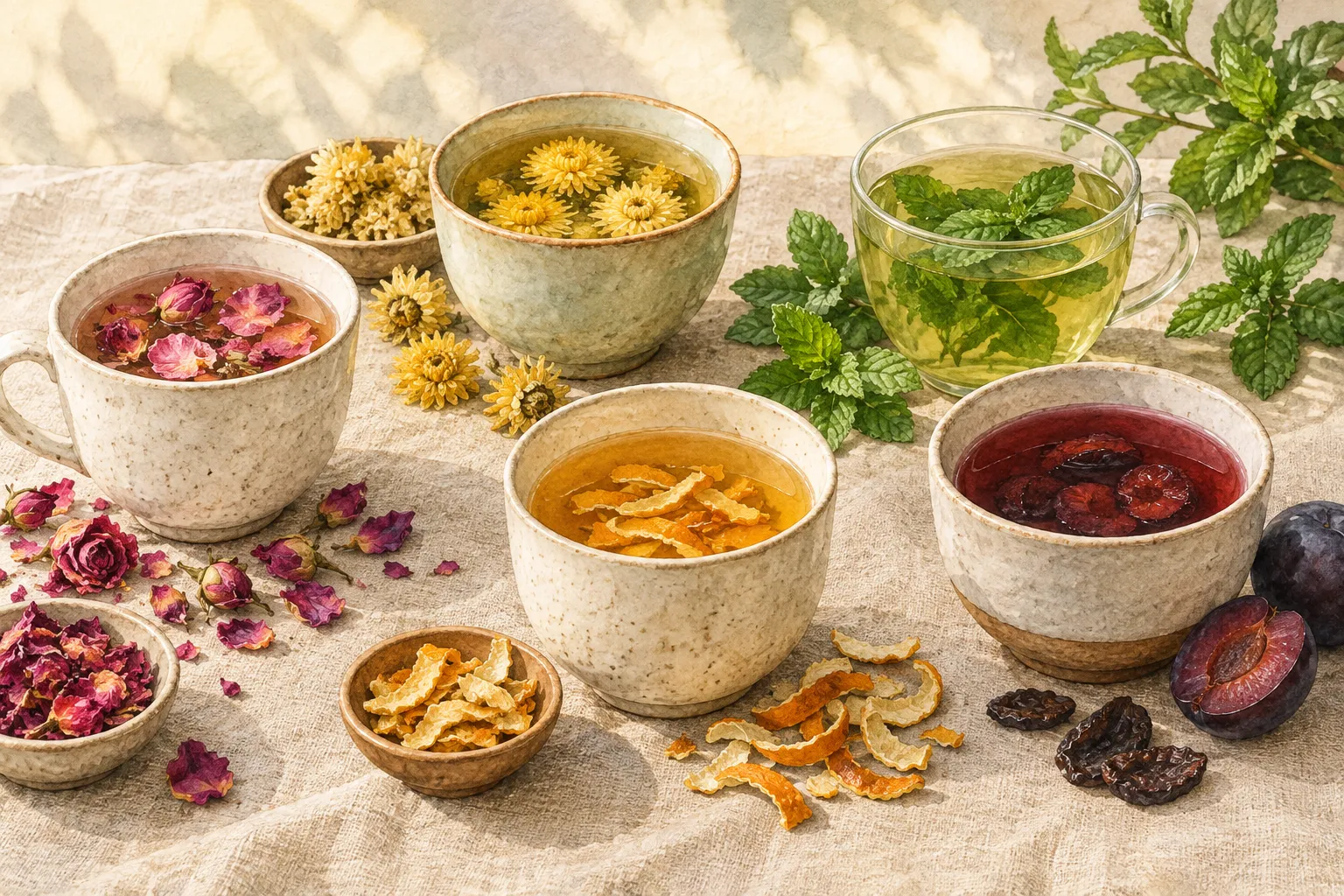
If floral blends appeal to you, start with rose or chrysanthemum. For a sharper fruit note, look for hawthorn or dark plum. The ingredient cues below can help you choose without treating one plant as “stronger” than another.
Botanical |
What to look for in the cup |
|---|---|
Rose and chrysanthemum |
Floral notes; rose can feel soft while chrysanthemum reads light and herbal. |
Jujube (red date), longan and goji berry |
Rounded fruit notes that can soften a floral or earthy blend. |
Peppermint and mulberry leaf |
A crisp mint impression or a green, leafy finish. |
Hawthorn, dark plum (wu mei) and tangerine peel |
Tart fruit and citrus peel notes that bring contrast to a sweeter-smelling blend. |
Cultivated ginseng and polygonatum rhizome (huang jing) |
Earthier ingredients for a mellow cup. |
Ginger, elderberry, echinacea, turmeric, chamomile and licorice root also turn up on teas marketed for immunity. Their names say little about the finished drink’s effects. Read the full list for tea leaves or added flavorings that may sit behind the featured botanical.
Choose a caffeine-free blend by flavor
VERI CHUN describes each of its five Chinese botanical infusions as naturally caffeine-free. The sachets are individually wrapped, and the choice between blends comes down to the ingredients and tastes you prefer.
Blend |
Full ingredient list |
Flavor direction |
|---|---|---|
Yue Rong |
Double-petaled Red Rose, Longan, Tangerine Peel, Jujube (Red Date), Goji Berry |
Soft rose, mellow fruit, light citrus |
Qing Ping |
Goji Berry, White Chrysanthemum, Cassia Seed, Lotus Leaf |
Light florals, subtle fruit sweetness, toasted-herbal finish |
Zhi Lü |
Mulberry Leaf, Chrysanthemum, Peppermint, Tangerine Peel |
Crisp mint, light florals, green finish |
Fu Feng |
Cassia Seed, Hawthorn, Tangerine Peel, Dandelion, Dark Plum (Wu Mei), Licorice Root |
Tart, dark-fruited, gently smoky |
Yi Yuan |
Cultivated Ginseng (5 years or younger), Mulberry Fruit, Polygonatum Rhizome (Huang Jing), Jujube (Red Date), Goji Berry |
Mellow, lightly earthy, gently fruity |
For soft rose and fruit, try Yue Rong, the one blend the store describes as having no added sugar. Qing Ping has lighter florals and a toasted-herbal finish. Zhi Lü gives you crisp mint; Fu Feng is tart and dark-fruited. Yi Yuan has a mellow, earthy profile.
The Yi Yuan product page states that this blend is not suitable for infants or young children, or for pregnant or breastfeeding women. For individual suitability questions, refer to its advisory and a qualified professional.
How to read the box before you brew
VERI CHUN publishes an ingredient reference alongside its blend lists. “Herbal tea” often refers to an infusion of flowers, leaves, roots, seeds, herbs or fruit instead of leaves from the tea plant, Camellia sinensis. If you are avoiding caffeine, look for black, green, white or oolong tea among the ingredients. Those blends differ from botanical-only infusions.
Jujube or longan may give a cup mellow fruit notes; that taste tells you nothing definite about sugar content. VERI CHUN describes Yue Rong as having “no added sugar.” It does not use that description for the other blends.
Read product-specific advisories, too. If suitability is a concern, an actual ingredient list and an advisory tell you more than the front of the box, even when the plants sound familiar.
Make it an easy daily ritual
VERI CHUN’s brewing instructions for all five blends call for one sachet with 350 ml (about 12 US fl oz) of water at 85°C / 185°F, steeped for 3 minutes. Other botanical infusions may call for a different preparation. Individually wrapped sachets are convenient to keep at your desk or bring out for an evening cup without caffeine.
For a first box, think about which cup you would look forward to: soft rose and fruit, crisp mint, tart dark fruit or mellow earthy notes. Buying a gift? The recipient’s taste is a better guide than guesses about their health goals.
The bottom line
A tea cannot promise immune protection, but it can give you a flavorful, caffeine-free pause in the day. Choose by the ingredients and taste you prefer. The VERI CHUN Herbal Tea collection offers five distinct botanical profiles to explore.


