

Best Herbal Teas for Focus
Looking for an herbal tea for focus instead of another coffee? Choose a caffeine-free infusion you like enough to make a habit of drinking. Mint is crisp, rose and fruit are softer, and earthy blends have a rounder finish. The cup won't supply caffeine or guarantee concentration. It does give you a moment to put down your phone and decide what to work on next.
Can herbal tea help you focus?
Drinking herbal teas between tasks lets you pause without another dose of caffeine. Put the kettle on after a meeting; by the time you've made your cup, you may be ready to settle into a stretch of work. The pause can feel calming. There's no basis here for promising a calming effect or improved attention from the plants.
If you want caffeine's stimulant effect, choose a caffeinated drink. If you want a warm cup and a few minutes away from the screen, an herbal infusion suits the occasion.
How to choose an herbal tea for focus by flavor
Picture the cup you'd reach for at your desk. For something fresh, try mint; for a softer sip, try rose and fruit. Dark fruit with citrus peel tastes tangier. An earthy infusion may appeal more if your usual drink has a roasted flavor.
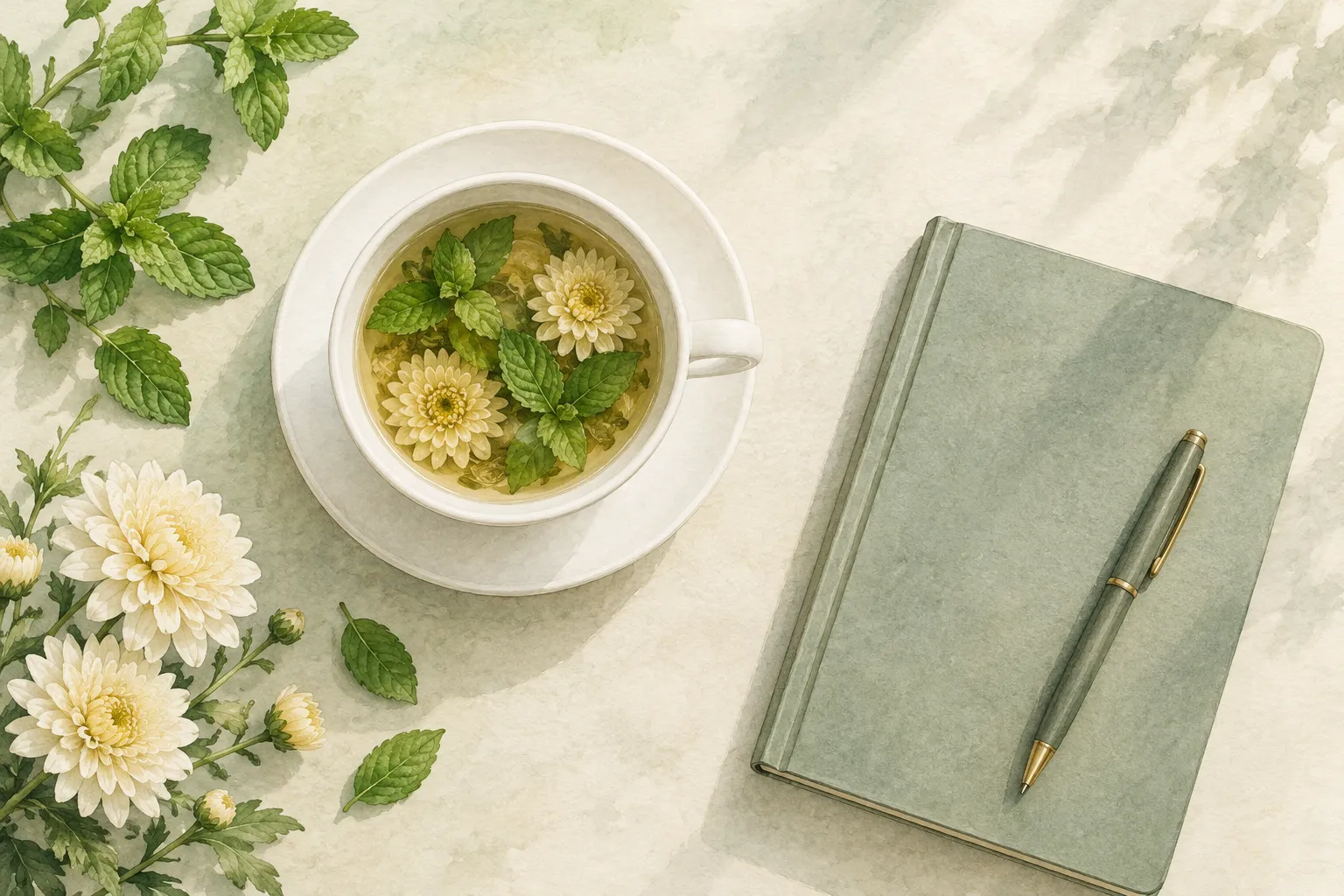
Blends meant for the same work break can taste nothing alike. Peppermint, chrysanthemum, rose, jujube (red date), longan and goji berry give you plenty of flavor directions to explore. VERI CHUN uses tangerine peel in several blends, rather than orange peel. If there are botanicals you avoid, read the full list; the Our Ingredients page introduces them.
Five VERI CHUN blends for different workday cups
VERI CHUN describes all five Chinese botanical infusions as naturally caffeine-free. They come in individually wrapped sachets. Here's how their ingredients and flavors differ:
Blend |
Full ingredient list |
Flavor and a useful place in the day |
|---|---|---|
Zhi Lü |
Mulberry Leaf, Chrysanthemum, Peppermint, Tangerine Peel |
Crisp mint, light florals, green finish; a fresh-tasting cup between calls. |
Yue Rong |
Double-petaled Red Rose, Longan, Tangerine Peel, Jujube (Red Date), Goji Berry |
Soft rose, mellow fruit, light citrus; a gentle choice if you prefer floral drinks. No added sugar. |
Qing Ping |
Goji Berry, White Chrysanthemum, Cassia Seed, Lotus Leaf |
Light florals, subtle fruit sweetness, toasted-herbal finish; less mint-forward than Zhi Lü. |
Fu Feng |
Cassia Seed, Hawthorn, Tangerine Peel, Dandelion, Dark Plum (Wu Mei), Licorice Root |
Tart, dark-fruited, gently smoky; for someone who wants a sharper finish rather than soft flowers. |
Yi Yuan |
Cultivated Ginseng (5 years or younger), Mulberry Fruit, Polygonatum Rhizome (Huang Jing), Jujube (Red Date), Goji Berry |
Mellow, lightly earthy, gently fruity; for a rounder, less tart cup. |
Yi Yuan’s product page says it is not suitable for infants or young children, pregnant women or breastfeeding women. For personal suitability questions, refer to the page advisory and a qualified professional. Its ginseng ingredient does not establish a focus benefit.
If mint sounds good, start with Zhi Lü. Yue Rong leans toward rose and mellow fruit; Fu Feng is tangier. Qing Ping finishes toasted-herbal, while Yi Yuan is earthier. For a gift, choose from the recipient's favorite flavors rather than guessing what they “need.”
When true tea makes more sense
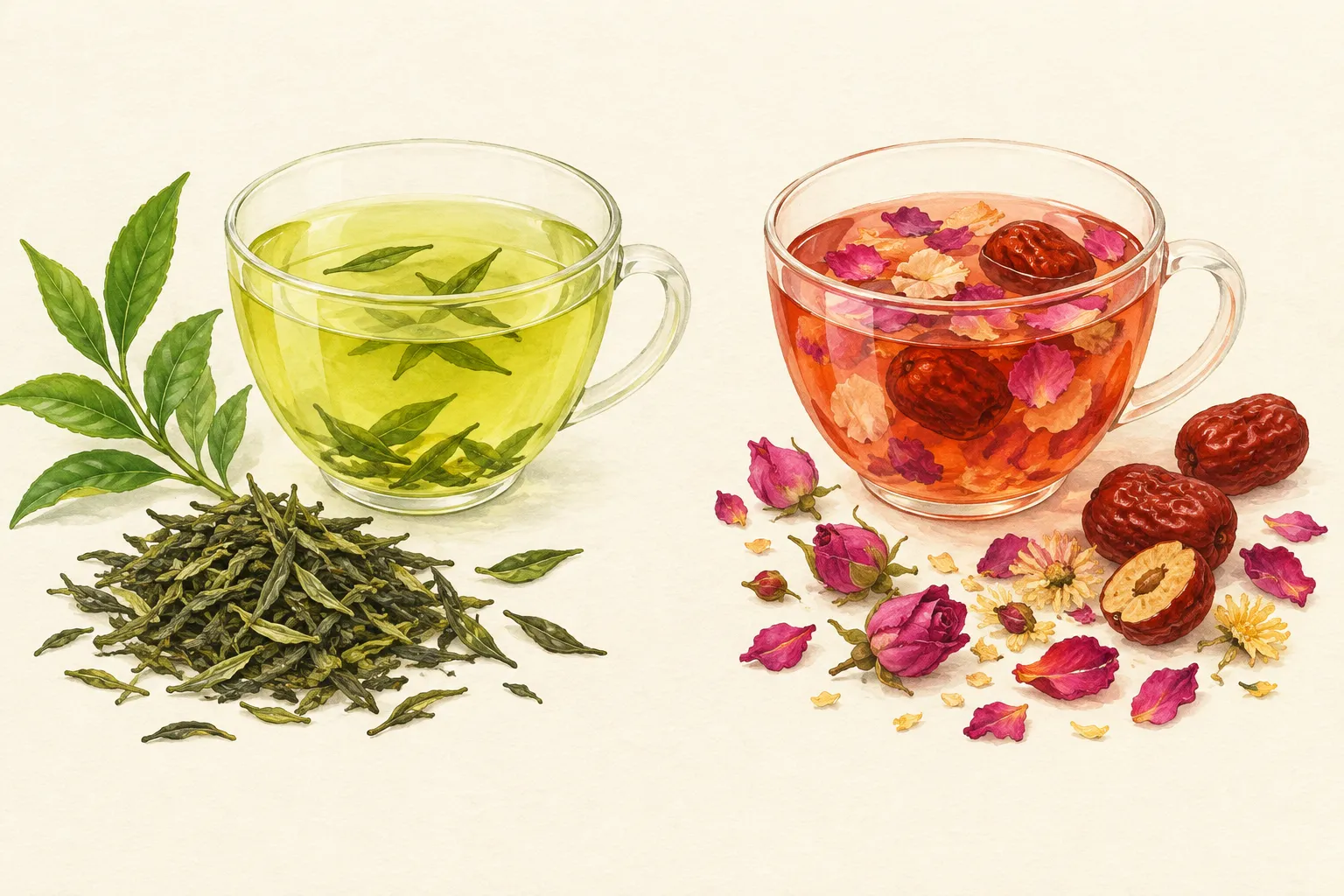
Green, black, white and oolong tea all come from Camellia sinensis and contain caffeine. A botanical infusion can be caffeine-free, but some blends include tea leaves or other caffeinated ingredients. Read the ingredients if caffeine is what decides your choice.
You want... |
Reach for... |
Keep in mind |
|---|---|---|
A caffeinated drink in place of coffee |
Green or black true tea |
It still contains caffeine; the amount depends on the tea and preparation. |
A warm work-break ritual without caffeine |
A caffeine-free botanical infusion |
It offers flavor and a pause, not a stimulant effect. |
A strong coffee-style jolt |
Coffee |
An herbal infusion is not an equivalent substitute. |
Yerba mate contains caffeine too. For a morning task or study session when you want a caffeinated cup, true tea or mate fits. For a later break without caffeine, choose a botanical infusion you like drinking.
"Typical amounts per 12-fluid-ounce drink: green tea 37 mg, black tea 71 mg, and regular brewed coffee 113–247 mg." - U.S. Food and Drug Administration
Make the tea break easy to repeat
VERI CHUN's directions for all five blends call for one sachet in 350 ml (about 12 US fl oz) of water at 85°C (185°F), steeped for three minutes. Those directions are for these blends; other teas may brew differently. Keep a wrapped sachet by the kettle or take one to work.
Try a small sequence when you need to switch gears:
Set out one sachet and fill the cup while you close the tabs you are not using.
Let it steep for the published three minutes; use that time to write down the next single task.
Bring the cup back to your desk and begin with that task, rather than opening a new stream of messages.
When your tea is ready, you already have a task in mind. For an afternoon cup, decide on caffeine first and flavor second.
The cup to start with
For a work break, Zhi Lü gives you crisp mint and Yue Rong gives you soft rose and fruit. Neither is a focus treatment. VERI CHUN publishes each ingredient list and its brewing directions, making it easy to pick by taste. Explore the Herbal Tea collection for a cup you'll want to make again.


