

Best Herbal Teas for Energy
The best tea for energy and focus depends on whether you want caffeine. Green tea, matcha, black tea and yerba mate contain it. For a warm morning cup or a fresh-tasting afternoon pause without caffeine, choose a botanical infusion. Read the ingredients rather than relying on “energy” or “herbal” on the label.
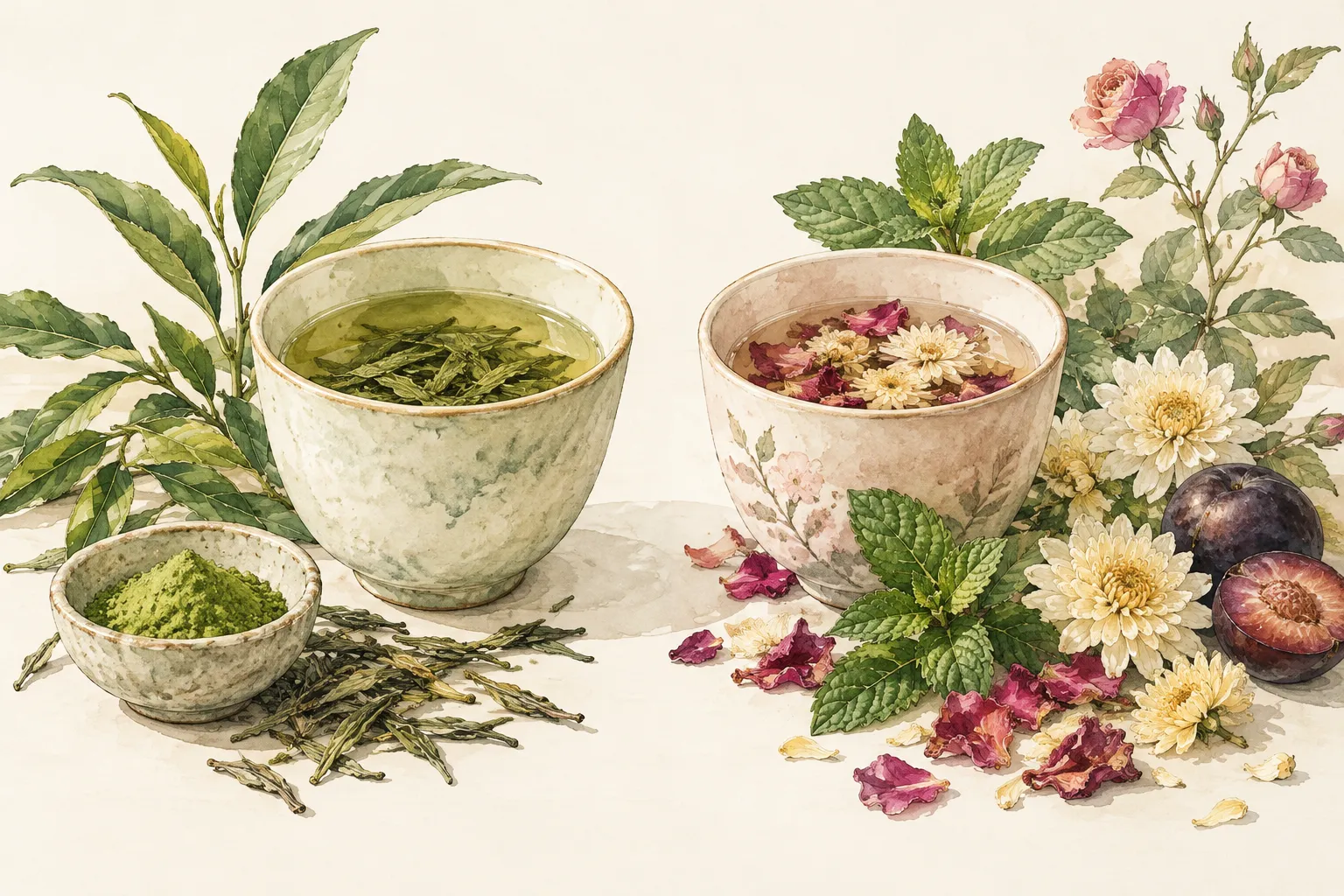
First decide what kind of lift you want
Green and black tea come from Camellia sinensis; matcha is powdered tea from the same plant. Yerba mate comes from a different plant. All four contain caffeine, though the amount in your cup depends on the product and how you prepare it. If caffeine leaves you feeling buzzy, a drink made without caffeinated ingredients may suit you better.
"Brewed green or black tea: 30–50 mg of caffeine per 8-ounce cup." - U.S. Food and Drug Administration
“Herbal tea” often means an infusion of leaves, flowers, fruits or roots other than tea leaves. Yerba mate is an herbal drink that contains caffeine. Decaffeinated tea differs from a naturally caffeine-free infusion as well: processing removes most of its caffeine, but some can remain. Minty aromas and a break from your desk can feel refreshing without making the drink a treatment for fatigue or a proven aid to concentration.
Which tea fits the moment?
What you want |
A sensible choice |
What to expect |
|---|---|---|
A caffeine lift before work |
Green tea or matcha |
Caffeine from the tea plant; choose according to the flavor and preparation you enjoy. |
A more assertive morning cup |
Black tea or yerba mate |
Both contain caffeine; yerba mate is an herbal infusion, not true tea. |
A fresh-feeling afternoon pause without caffeine |
Peppermint or a mint-forward caffeine-free blend |
Cooling aroma and flavor, with no caffeine lift if the entire ingredient list is caffeine-free. |
A quiet cup later in the day |
Floral, fruity or earthy caffeine-free botanicals |
Flavor and a warm-drink ritual, not a stimulant effect. |
For a caffeine lift, choose a caffeinated tea. For a break that feels steady rather than buzzy, a caffeine-free botanical infusion can be enjoyable for its flavor and the few minutes you spend making it.
Botanicals people often reach for
Peppermint tastes crisp and cooling. Ginger adds warmth and spice; citrus peel lends a fragrant edge. Rose and chrysanthemum bring floral notes, while jujube, goji berry and longan can lend mellow fruit flavor. If you want an herbal tea for a work break, these flavors offer a better way to choose than claims about focus or alertness.
Ginseng also appears in some herbal blends for energy. Its reputation does not establish what a finished infusion will do. The full ingredient list and flavor profile tell you more about the cup you are choosing; product-specific advisories matter too.
Five caffeine-free botanical blends to choose by flavor
VERI CHUN describes all five blends as naturally caffeine-free, with individually wrapped sachets. Their full ingredient lists and flavors give you a way to choose by taste. You can read more in VERI CHUN’s ingredient notes.
Blend |
Ingredients |
Flavor and a moment to choose it |
|---|---|---|
Yue Rong |
Double-petaled Red Rose, Longan, Tangerine Peel, Jujube (Red Date), Goji Berry |
Soft rose, mellow fruit and light citrus. A gentle-tasting first cup if you prefer floral-fruity flavors. This is the one blend described as having no added sugar. |
Zhi Lü |
Mulberry Leaf, Chrysanthemum, Peppermint, Tangerine Peel |
Crisp mint, light florals and a green finish. A fresh-tasting break at a desk. |
Fu Feng |
Cassia Seed, Hawthorn, Tangerine Peel, Dandelion, Dark Plum (Wu Mei), Licorice Root |
Tart, dark-fruited and gently smoky. Choose it when you want a punchier fruit profile instead of a delicate floral cup. |
Qing Ping |
Goji Berry, White Chrysanthemum, Cassia Seed, Lotus Leaf |
Light florals, subtle fruit sweetness and a toasted-herbal finish. A softer option for a slow afternoon. |
Yi Yuan |
Cultivated Ginseng (5 years or younger), Mulberry Fruit, Polygonatum Rhizome (Huang Jing), Jujube (Red Date), Goji Berry |
Mellow, lightly earthy and gently fruity. Choose it if earthy flavors appeal to you, not as a promise of stimulation. |
Yi Yuan advisory: The Yi Yuan product page states that it is not suitable for infants or young children, pregnant women, or breastfeeding women. For personal suitability questions, see that advisory and consult a qualified professional.
If you tend to reach for sharp, refreshing drinks, start with the mint-forward blend. The rose blend suits softer fruit and floral tastes; dark plum is tart, and the earthy blend is mellower. Ginseng on the label does not promise an energy effect.
Make the tea you chose
VERI CHUN’s published brewing direction for all five blends is one sachet in 350 ml (about 12 US fl oz) water at 85°C / 185°F, steeped for 3 minutes. Other herbal infusions and caffeinated teas may call for different preparation. The individually wrapped sachets are easy to put in a desk drawer for a cup later.
You might drink green tea in the morning for caffeine and save a botanical infusion for the afternoon. If you avoid caffeine all day, pick mint between tasks or a softer floral or fruit cup toward evening. Making the tea gives you a short pause between activities, whatever you choose.
The bottom line
For a caffeine lift, pick a drink that contains caffeine. VERI CHUN’s botanical blends offer something else: a caffeine-free cup with clear ingredients, distinct flavors and one straightforward brewing instruction. Explore the Herbal Tea collection and choose the flavor you would like to make part of your day.


