

An Herbal Tea Tasting Sheet for Finding Your Flavor
Want to find an herbal tea you enjoy drinking? An herbal tea tasting sheet for finding your flavor gives you a place to note the aroma, flavor, body and finish of each cup. Fill in one row each time you brew. After a few cups, you can see which descriptions appeal to you and use them to choose another blend, in your own words.
Use the herbal tea tasting sheet to find your flavor
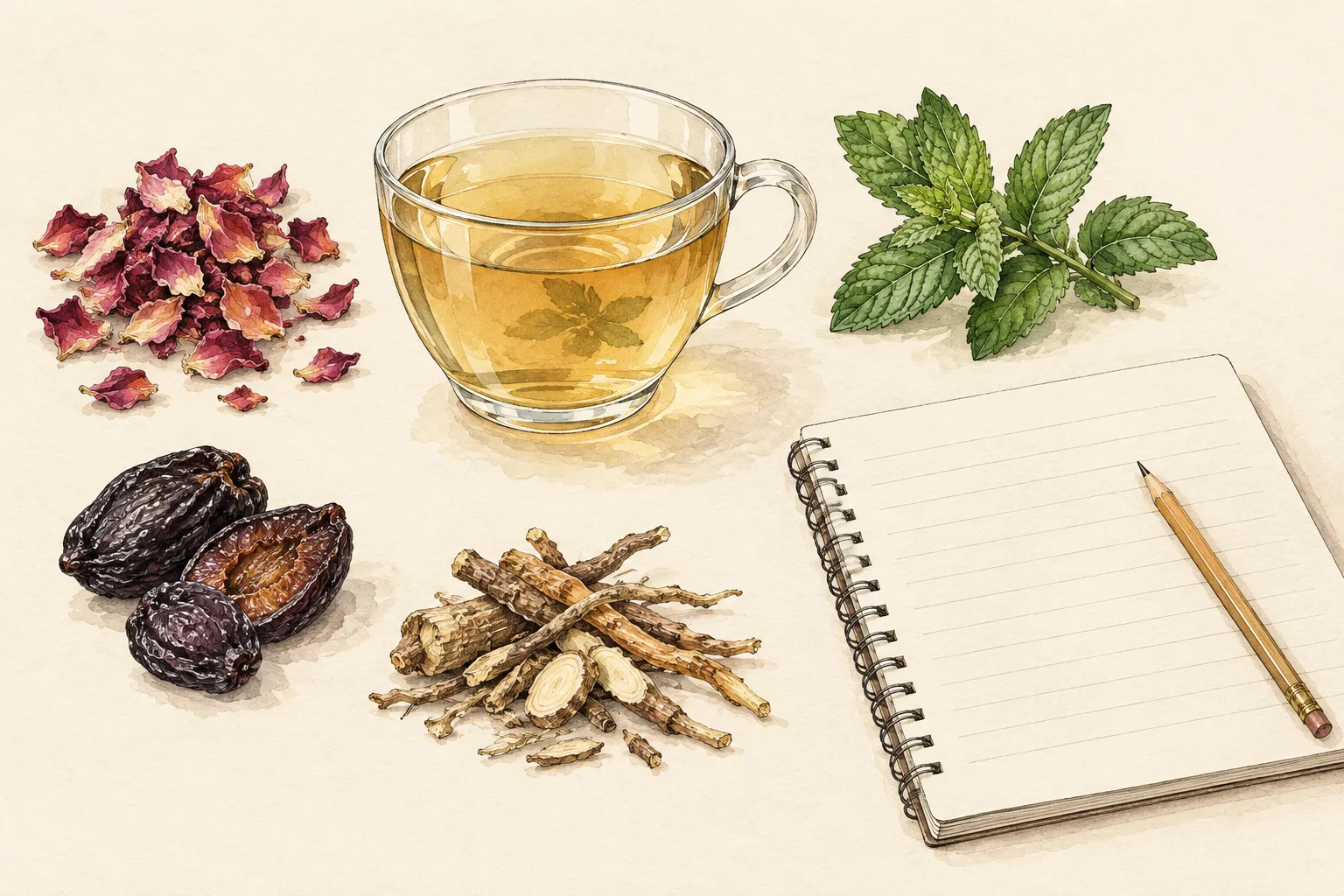
Copy the grid into a note or print the page. Blank spaces are fine. The last column is for the thought you may want later: would you choose that cup again, and why?
Blend and date |
Brewing notes |
Aroma: before sipping |
Flavor: first sip |
Body: how it feels |
Finish: what lingers |
Would I choose it again? |
|---|---|---|---|---|---|---|
__________ |
Water: ____ Temperature: ____ Time: ____ |
__________ |
__________ |
__________ |
__________ |
Yes / Maybe / No, because __________ |
__________ |
Water: ____ Temperature: ____ Time: ____ |
__________ |
__________ |
__________ |
__________ |
Yes / Maybe / No, because __________ |
__________ |
Water: ____ Temperature: ____ Time: ____ |
__________ |
__________ |
__________ |
__________ |
Yes / Maybe / No, because __________ |
To record one blend at a time, copy this smaller card:
Blend and date: __________
Preparation: __________
Aroma: __________
Flavor: __________
Body: __________
Finish: __________
My verdict and why: __________
Your notes may differ from the blend’s description. “Smells floral, tastes tart, feels light, leaves a fruity note” is plenty of detail.
How to fill it in
Start with the same brewing method
VERI CHUN instructs you to brew each of its five infusions with one sachet in 350 ml (about 12 US fl oz) of water at 85°C / 185°F for three minutes. Each sachet comes individually wrapped. For a fair comparison, use the same water volume, temperature, steep time and type of mug. Note any changes, since steeping longer or using less water may affect the flavor you notice.
Wait until the drink is comfortable to sip, then make your first notes before adding anything. If you add something later, jot that down too. A rating is optional; the words you choose will tell you more about what to brew next.
Move from aroma to finish
Flavor includes smell and sensations in the mouth as well as taste. ISO describes it this way:
"Complex combination of the olfactory, gustatory and trigeminal sensations perceived during tasting." - International Organization for Standardization
Aroma: Smell the brewed cup. Do flowers, citrus peel, fruit, mint or herbs come to mind? “Faint” is worth writing down too.
Flavor: Sip and write down your first impression: tart, softly fruity, minty, floral or earthy, perhaps a mix.
Body: Pay attention to the drink’s weight in your mouth. “Light,” “rounded” and “thin” describe texture rather than quality.
Finish: After swallowing, see what stays with you. You might notice a fresh green note, a tart edge or a toasted-herbal impression, or little lingering flavor.
Finish with a preference in your own words. “I like the rose but want less fruit” gives you more to work with next time than a score alone. You can fill in the grid across several days, one cup at a time.
When you revisit a blend, add a row rather than editing your first notes. You may prefer the cup at a different temperature or notice a flavor you missed before. If a published description says “subtle fruit sweetness,” write down whether you taste it; the phrase alone says nothing about added sugar. VERI CHUN describes Yue Rong specifically as having no added sugar.
Match your notes to a blend
VERI CHUN describes all five Chinese botanical infusions as naturally caffeine-free. The flavor profiles in the table come from the brand’s product descriptions, not a tasting of the cups prepared here. Pick a profile that appeals to you and use the sheet for your own impressions.
Blend |
Published flavor profile |
Listed ingredients |
If you tend to like... |
|---|---|---|---|
Soft rose, mellow fruit, light citrus |
Double-petaled Red Rose, Longan, Tangerine Peel, Jujube (Red Date), Goji Berry |
Gentle floral notes with fruit |
|
Light florals, subtle fruit sweetness, toasted-herbal finish |
Goji Berry, White Chrysanthemum, Cassia Seed, Lotus Leaf |
Quiet florals and a toasty ending |
|
Crisp mint, light florals, green finish |
Mulberry Leaf, Chrysanthemum, Peppermint, Tangerine Peel |
Fresh mint and green notes |
|
Tart, dark-fruited, gently smoky |
Cassia Seed, Hawthorn, Tangerine Peel, Dandelion, Dark Plum (Wu Mei), Licorice Root |
Tart fruit with a smoky edge |
|
Mellow, lightly earthy, gently fruity |
Cultivated Ginseng (5 years or younger), Mulberry Fruit, Polygonatum Rhizome (Huang Jing), Jujube (Red Date), Goji Berry |
A softer earthy profile |
Huang jing is the Chinese name for polygonatum rhizome; wu mei names the dark plum in Fu Feng. Our Ingredients gives more detail on the botanicals. The list tells you what is in a blend, though some ingredients may be less noticeable in the cup. The Yi Yuan product page says it is not suitable for infants or young children, or for pregnant or breastfeeding women. For individual suitability questions, refer to that advisory and a qualified professional.
Turn the grid into a shortlist
Read across your rows for the flavors you keep returning to. If you like floral aromas and want to try a toasted-herbal finish, consider Qing Ping after Yue Rong. Prefer mint to tart fruit? Try Zhi Lü before Fu Feng. Yi Yuan is an option for mellow, earthy flavor with fruit; keep its product-page advisory in mind.
For a gift, start with flavors the recipient already likes. Soft rose and fruit point toward Yue Rong; crisp mint points toward Zhi Lü. Keep your own notes by your mug or in your phone for the next cup, then explore VERI CHUN’s herbal tea collection to choose by flavor and ingredients.


